Various artists. Produced by Aurora Lights, 2009. 18 tracks: 14 songs and 4 interviews.
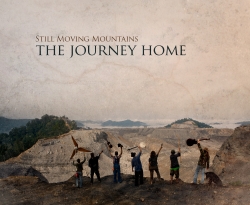
Still Moving Mountains: The Journey Home. Cover art (c) 2009 Chad Stevens.
The music of movement.
A unique combination of music, visuals, and community involvement, "Still Moving Mountains: The Journey Home" unleashes the passion and urgency empowering the movement against mountaintop removal at this critical moment. The album includes all facets of the movement for justice and progress in Central Appalachia.
The album is a sequel to 2004's successful "Moving Mountains," a musical compilation of artists and residents released by Falling Mountain Music. It was produced by Jen Osha, founder and Director of Aurora Lights, a nonprofit organization based out of Morgantown, West Virginia. All proceeds from the album will be used for grants and other educational and charitable purposes consistent with Aurora Lights' mission to raise awareness of the impacts of mountaintop removal coal mining. The first CD raised more than $6,000 for local grassroots work.
The first grant from this CD goes to support the community kitchen in Rock Creek, W.Va. This volunteer kitchen feeds activists and community members living in the Coal River Valley, many of whom are working to end mountaintop removal.
Continuing in their goal to "strengthen the connections within and between human communities and their natural environment by promoting environmental and social action," Aurora Lights has finished a second body of music and interviews. "Still Moving Mountains: The Journey Home" follows a vein similar to their first release, but according to the producers the concept is branching out further.
The concept for 2004's "Moving Mountains" came from the idea that the music of the movement is important but not highlighted enough, and most of the songs were explicitly anti-mountaintop removal. The new album doesn't depart from the cause, but it does emphasize the beauty that remains in the communities of the Appalachian coalfields.
In other words, there is more to Central Appalachia than coal.
Track list
Select a song title for its lyrics and credits, further down this page.
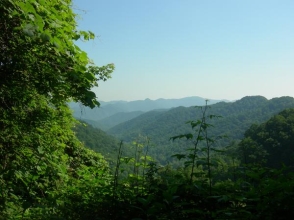
Central Appalachia offers much more than coal. Photo by Sam McCreery.
Through 14 musical tracks and additional interviews, the new CD expands upon Aurora Lights' first benefit CD. Like the first, "Still Moving Mountains" mourns the devastation of mountaintop removal coal mining and celebrates the courage of coalfield resistance - while also celebrating the surviving communities' beauty and the residents' hopes for the future.
The producers selected music for "Still Moving Mountains" to emphasize that without a focus on intentional transformation to create a positive future, the beauty that remains in Appalachia will not survive the blasts and out-of-order court rulings. This is reflected in the music of the future-minded, as coalfield areas look ahead to renewable energy like wind farms and bring it into today.
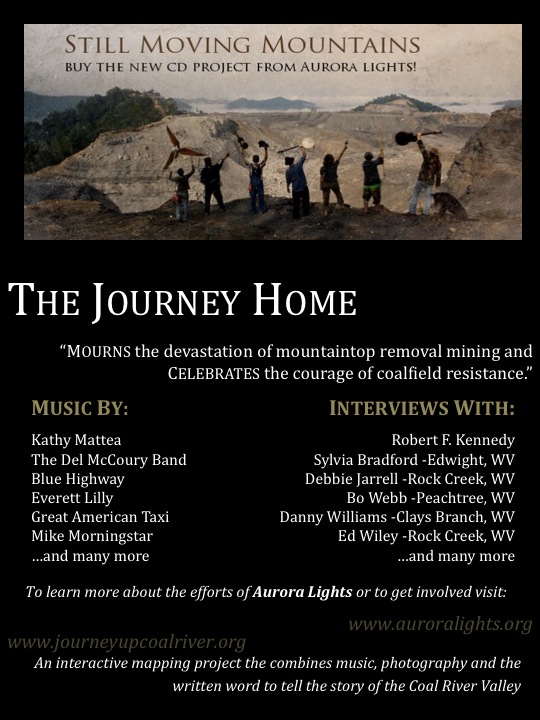
The CD combines interviews with local residents impacted by mountaintop removal with a mixture of local and well-known artists: Kathy Mattea, Del McCoury, Blue Highway, Everett Lilly and the Lilly Mountaineers, Great American Taxi, and Andrew McKnight. Interviews from Mattea and Robert Kennedy, Jr., are also on the CD. "The combination of music and interviews on 'Still Moving Mountains' is especially intriguing," Mattea said. "I am excited about the musical, inspirational and educational combination here, and honored to be part of it." Aurora Lights production manager Sam McCreery believes this mixture creates an opportunity for everyone featured on the album. The presence of more well-known artists' names on a CD will give newer musicians a great opportunity for increased listening exposure, but it also points to the merit of the lesser known artists who are paired with some of the greats.
Vince Herman of Great American Taxi. Photo by Eric Peter Abramson.
This project gave all of the artists the opportunity to learn more about the movement for justice in Appalachia as they listen to each others' music and pass along their stories and lessons learned. Musician Vince Herman of Great American Taxi described his contribution as an expressive act of standing in solidarity with local activists like Ed Wiley. "I think music is a great way to tell a story that breaks people's hearts and stirs them to action," Herman explained.
"My family has a history in underground mining, and I have a deep love of West Virginia from the years I spent playing and studying there...The least I could do is write a song. The least we can do as a country is to stop MTR in its tracks right now before more of this great country is lost forever," Herman added.
Hillsides come a-sliding
Beyond the collection of music, the project goes hand in hand with a multimedia website titled Journey Up Coal River. The website features links to interviews with residents and activists in the Valley, as well as additional photographs and songs particularly related to the local area.
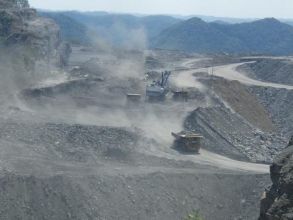
Aggressive mining practices spare neither Appalachia's people nor its countryside. Photo by Jen Osha.
The website adds to community efforts by mapping the Coal River Valley through the eyes of the community itself. On the website, listeners can use the map to pinpoint the setting of a song or issue, and find photographs, videos, interviews, and stories to deepen their understanding of the issue, and even get involved themselves. The website was developed with financial support from the West Virginia Humanities Council and represents an inspirational grassroots effort from many volunteers, residents, and organizations.
"The multimedia website also serves as a classroom educational tool, providing lesson plans layered in six themes," says the website's designer and copy-editor, Charles Suggs. "Professors from both within West Virginia and out of state have already started developing unique curricula based upon the CD and website."
The producers describe the site as showing both the human and the physical geography of the area, including not just the rich terrain and landscape but also the culture, tradition and lifestyle of the people whose heritage in the Valley goes back for generations. Imagine you're listening to a rendition of "Black Waters." When you reach the lyrics "the hillsides come a-sliding so awful and grand," you can take the experience to the next level just by going to the map online.
There, a link will take you from the song about black water to the website of the Prenter Emergency Water Fund, with information about a community in the Coal River Valley being robbed of clean drinking water because of nearby mines and coal processing. You can listen to a resident of Prenter Hollow talk about her fight to find clean water and to protect the land from those who want to use it for their own purposes.
Praise
This is the second CD released for the cause. It’s beautiful!
There can be no mistake: the music is making an impact.
Eric Wrisley, A Call to Action, FolkWax,
These 14 Americana songs about union miners and flood survivors are fresh and familiar, brisk and touching, with frisky fingerpicking and full-throated vocals. This compilation harnesses the natural power of American music to expose the heartbreaking truth about mountaintop removal coal mining.
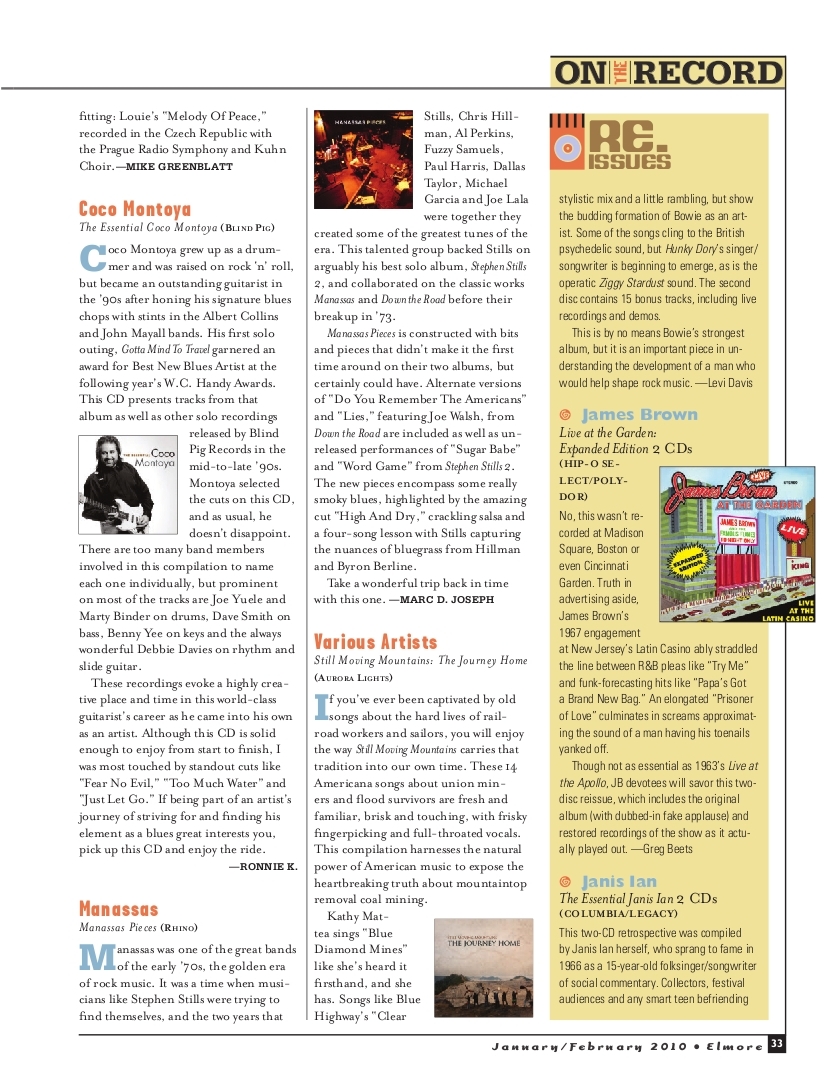
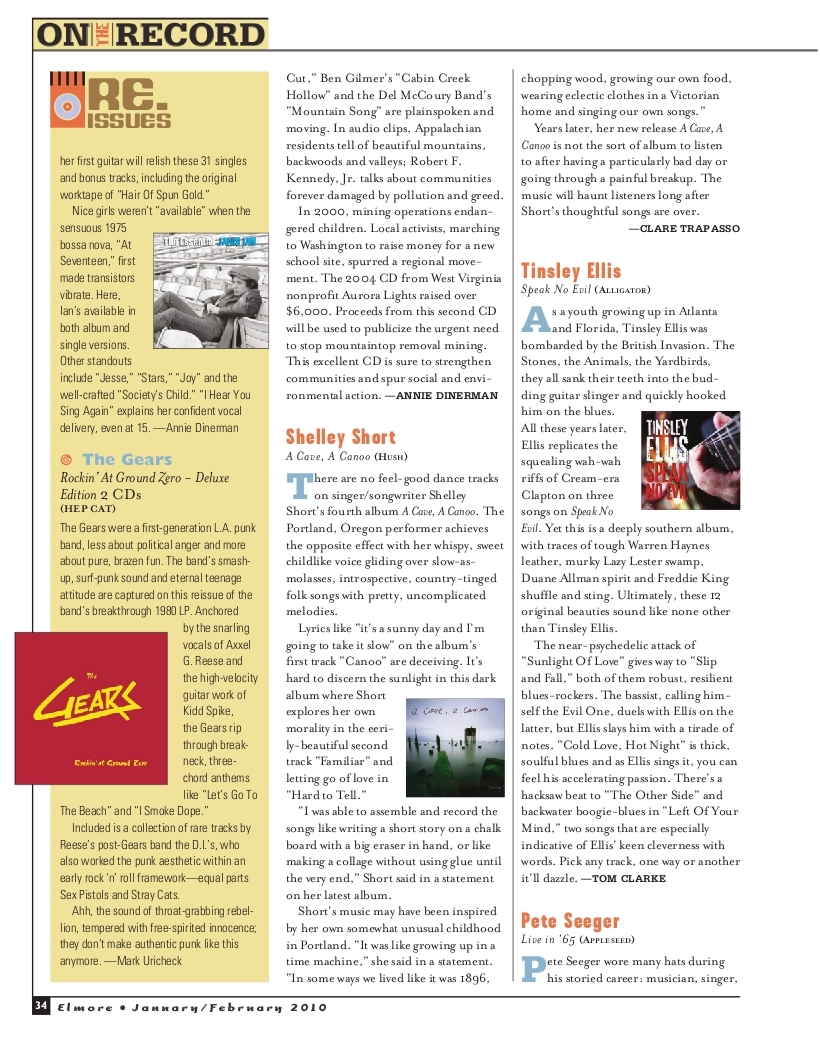
Annie Dinerman, review of Still Moving Mountains: The Journey Home, Elmore magazine, January/February 2010, page 33 (scans: page 1, page 2)
Artists of Appalachia
The CD features fourteen musical tracks and additional interviews. Among the artists are:
Everett Lilly and the Lilly Mountaineers
Masters of Bluegrass music, The Lilly Brothers, Everett and Bea, and Don Stover were pioneers in bringing professionally performed southern Appalachian music to the upper northeastern region of the United States. Originating from Clear Creek, a community near Beckley, West Virginia, Everett and Bea began their career by singing in churches and at area shows. (Image and bio from thelillymountaineers.com)
The Del McCoury Band has embodied the best qualities of bluegrass. The band enjoys the praise of traditional bluegrass lovers and tie-dyed clad 'Del-Heads' alike. Del, born in Bakersville, North Carolina, has proven not to be a relic of bluegrass music's past, but an architect of its future. (Image and bio from delmccouryband.com. Photo by Brian Blauser.)
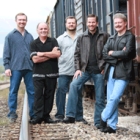
At the 15-year mark, Blue Highway is indisputably one of the most esteemed and influential groups in contemporary bluegrass. Individually, Jason Burleson (banjo, guitar, mandolin), Rob Ickes (Dobro), Shawn Lane (mandolin, fiddle, vocals), Tim Stafford (guitar, vocals), and Wayne Taylor (bass, vocals) are masters of their respective roles. Together, in Stafford's words, they are "a democracy [of music] in the best sense of the word." (Image and bio from bluehighwayband.com)
Ben Gilmer grew up in the mountains of southwestern Virginia where he passed his time messing around the farm with his brother and cousins and playing music with family. Ben started out learning traditional bluegrass music the traditional way - Thursday nights at the local barbershop with the regular gathering of seasoned pickers. Ben's songwriting reflects a strong sense of place deeply rooted in southern Appalachia - honest songs about hard times, family, and love. (Image and bio from myspace.com/bengilmer)
Kathy Mattea, the beloved, Grammy-winning singer of such classics as "18 Wheels and A Dozen Roses," "Where've You Been," and many other hits says that her new album offered her a "re-education" in singing. That album, COAL, is a re-education for the listener as well, a record that reshapes the way we think about music, reminding us of why we love it so much in the first place. (Image and bio from mattea.com)
"'Blue Diamond Mines' is a classic, written by Jean Ritchie. It encompasses so much about the history of mining, from union organizing to black lung to strip mining, to the monoculture that can hold people hostage and take away their choices.
The combination of music and interviews on 'Still Moving Mountains' is especially intriguing. I am excited about the musical, inspirational and educational combination here, and honored to be part of it."
The LoneTones
The Lonetones are a Knoxville, Tenn., band that plays original, Appalachian, roots-based music that goes well beyond the "tradition." They've been called modern folk, Americana, folk rock, "an Appalachian Belle and Sebastian." They"ve been accused of having a unique sound and strong song writing. They have three albums to their credit that have garnered national attention. (Image and bio from thelonetones.com)
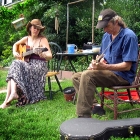
Debra Cowan was once asked what kind of songs she writes. Her reply? "Bad ones. Besides, there are so many good songs out there written by others and they should be sung." Her captivating warm alto carries each folk song she chooses with such emotion that you'll forget that they were written by others. She performs a cappella and with guitar in the great tradition of folk singers like Joan Baez and Judy Collins, with a clear vocal that calls forth the ghosts of long past but can also offer a more modern urban landscape. (Image and bio from debracowan.com. Photo by Susan Wilson.)
When poor health limited his physical activity at age 12, Mike Morningstar turned to the guitar. He concentrated on learning the "flat-pick" style for the next three and a half years. In 1964 at 16 years of age, Mike kicked off his professional musical career when he joined a rhythm & blues/soul band, composed of mostly black artists. For the past three decades, Mike has played music in nightclubs and pubs, at festivals and college campuses and as the opening act for many artists. (Image and bio from members.citynet.net/mikemorningstar)
"My brother, Steve, and I were staying in a small hunting camp on Bull Creek, W.Va. in the spring of 1972, when the "Buffalo Creek Flood" occurred. My brother's good friend, Keith, worked for the Department of Natural Resources, and was called out to help in the clean-up after the disaster. He told us about pulling the bodies of dead children from the mud and debris along that hollow. That experience left him angry, and his anger was contageous. My brother and I wrote the song in about an hour and I've been singing it for 37 years in hopes that people will not forget those children who lost everything."
Alan Johnston and the South 52
South 52, featuring Alan Johnston, Jessi Shumate, Stacy Grubb, Steve Acord, Nathan Lawson, and Charlie Davis, is not your everyday run of the mill bluegrass band. Just come out to a show and listen to their special treatment of songs from ZZ Top to Ralph Stanley plus a vast array of original songs and you'll see for yourself! Their new CD, Sweet Appalachia, is complete and consists of 16 songs - of which 15 are original songs written by Alan and Stacy. (Image and bio from geocities.com/downhomerecords)
Now residing in the Allegheny ridges in the northern mountains of West Virginia, Keith and Joan Pitzer have been performing together for over thirty years. Their folk oriented roots music accentuated with strong harmonies, Keith's unique and masterful guitar style and harmonica and Joan's solid fretless bass and occasional penny whistle puts one in the mind of some of the great folksingers like Ian and Sylvia Tyson or Gordon Lightfoot. (Image and bio from pitzermusic.com)
R.I.S.E. (formally Rising Appalachia) is a genre-bending force of sound that uses both lyrical prowess and diverse artistic collaborations to defy cultural cliches and ignite a musical revolution. Music is the tool with which we wield political prowess. Melody for the Roots of each of us...spreading song and sound around the globe. (Image and bio from myspace.com/risingappalachia)
"Appalachia is a deeply sacred place. It holds a wealth of knowledge in ecology, and plant diversity that rivals even the Amazon. But beyond that, it is a magical mystical space to simply take a breath in. It is no great challenge for anyone to look at the excessive damage of mountaintop removal and recognize that it is one more painful step away from a balanced existence within the earth. This kind of mining is another crystalline example of corporate growth at the expense of the working class, offering short term jobs to hard working locals who need the income, but are given little explanation or apology for the devastating long term effects that mountaintop removal has on everyone. The work being done to raise consciousness about Appalachia is just as pressing as the movements to reduce prison numbers in our urban spaces or to discontinue the logging of our rain-forests. It is absolutely necessary for people to ban together to reduce the human impact on the world. We are each deeply connected to this living planet, both around the corner and across the sea...
RISE believes that it is our privilege and our full responsibility to use the power of music and art to continue to promote a deeper awareness of modern alchemy - we are each mixing and melting a recipe for sustainability, creating a palate for a healthy socio-economic-human existence... reveling in the value of each living thing around us."
Great American Taxi
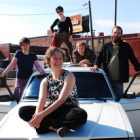
Great American Taxi has been led by Vince Herman and Chad Staehly since its inception for a Rainforest Action Group benefit show in March of 2005. Now approaching well over 400 shows, the band has kept a fairly busy schedule of 140 shows a year. Great American Taxi's sound has been compared to a variety of roots oriented bands including New Riders of the Purple Sage, a "Grateful Dead for the new millennium," Wilco, Uncle Tupelo, The Byrds and more. (Image and bio from greatamericantaxi.net)
"I think music is a great way to tell a story that breaks peoples' hearts and stirs them to action. My family has a history in underground mining and I have a deep love of West Virginia from the years I spent playing and studying there. One needs only one look at a mountaintop removal site to know that that land is lost forever. That breaks my heart. I can't imagine how it feels to those with deeper connections to the land than I have. A family grave destroyed, black water pouring out the homestead faucet, a fishing hole destroyed. The least iI could do is write a song. The least we can do as a country is to stop MTR in its tracks right now before more of this great country is lost forever."
Andrew McKnight
Since permanently leaving his corporate environmental engineering career in 1996, the award-winning folk and Americana artist's musical journey has traced nearly half a million miles of blue highways nationwide, and earned him a wealth of critical acclaim and enthusiastic fans for his captivating performances and five CDs on the independent Falling Mountain Music label. The Shenandoah Valley-based performer often shares his talents for worthy causes. (Image and bio from andrewmcknight.net)
Jen Osha, Grayson Samples, and Vince Farsetta came together to play Shumate Dam, a song about the dangers of the slurry impoundment behind Marshfork elementary. Life-long musician and activist Jen Osha is a multi-instrumentalist and vocalist who enjoys writing songs around issues of social justice. Grayson Samples comes from a musical family tree that spans generations of Appalachian traditional musicians, and has appeared at the Vandalia Gathering, the West Virginia State Folk Festival, Stonewall Resort, Snowshoe, Mountain Stage, The Brazen Head Inn, and many other gatherings. Vince Farsetta is a two time National Old Time Banjo Champion, a vocalist, multi-instrumentalist (banjo, guitar, mandolin, and dulcimer) and a songwriter with songs recorded by Leftover Salmon, Toni Price, David Schnaufer, and Dave Grant featuring Dave Mathew's on vocal.
Jeff Bosley, technical director of West Virginia Public Broadcasting's Mountain Stage, is also the technical director for "Still Moving Mountains: The Journey Home." Jeff and Jen Osha have worked closely together since 2002 to produce the first Moving Mountains CD and have collaborated on community concerts as well. Jeff currently produces student and faculty recording projects at Marshall University's Jomie Jazz studio as well as conducting classes and workshops in Music Technology and Digital Recording for the MU Music Department. He has engineered on-location webcasts of the West Virginia Supreme Court for the last six years.
Jen Osha
Nine years ago, the courage of coalfield residents drew Jen Osha to the struggle against mountaintop removal in southern West Virginia. For two years, she traveled the mountain state to record interviews and music for the 2004 Moving Mountains benefit CD. Now a Ph.D. candidate in geography at West Virginia University, Osha is using her research to combine music, local interviews, and participatory maps with multimedia and additional resources on the accompanying website. The result is an organizing tool created by and for the local people. Osha is currently the Director of Aurora Lights, which she founded in 1998 after witnessing first hand the impacts of clear-cutting and oil drilling on the Quichua and Huaorani peoples of Ecuador. (Photograph (c) Antrim Caskey, 2009)
Chad Stevens
In the past five years, Chad A. Stevens has been a faculty member in the photojournalism program at the International Center of Photography, Western Kentucky University and Ohio University, a nomadic photographer and multimedia producer in Africa, a multimedia producer at MediaStorm, and is now a faculty member at the University of North Carolina at Chapel Hill. In 2006 he began a documentary about energy in Appalachia. In 2008 he was nominated for an Emmy in the 2008 Awards for News and Documentary and won a Webby Award in 2009. While in Africa, he produced multimedia projects for Save the Children, AIDchild, Literacy and Basic Education and the Global Food for Education Initiative. When not working his time was spent wandering through Uganda, climbing a volcano, tracking chimpanzees, swimming in the deepest lake in Africa and teaching children to juggle. (Photograph (c)Chad Stevens, 2009)
Posters
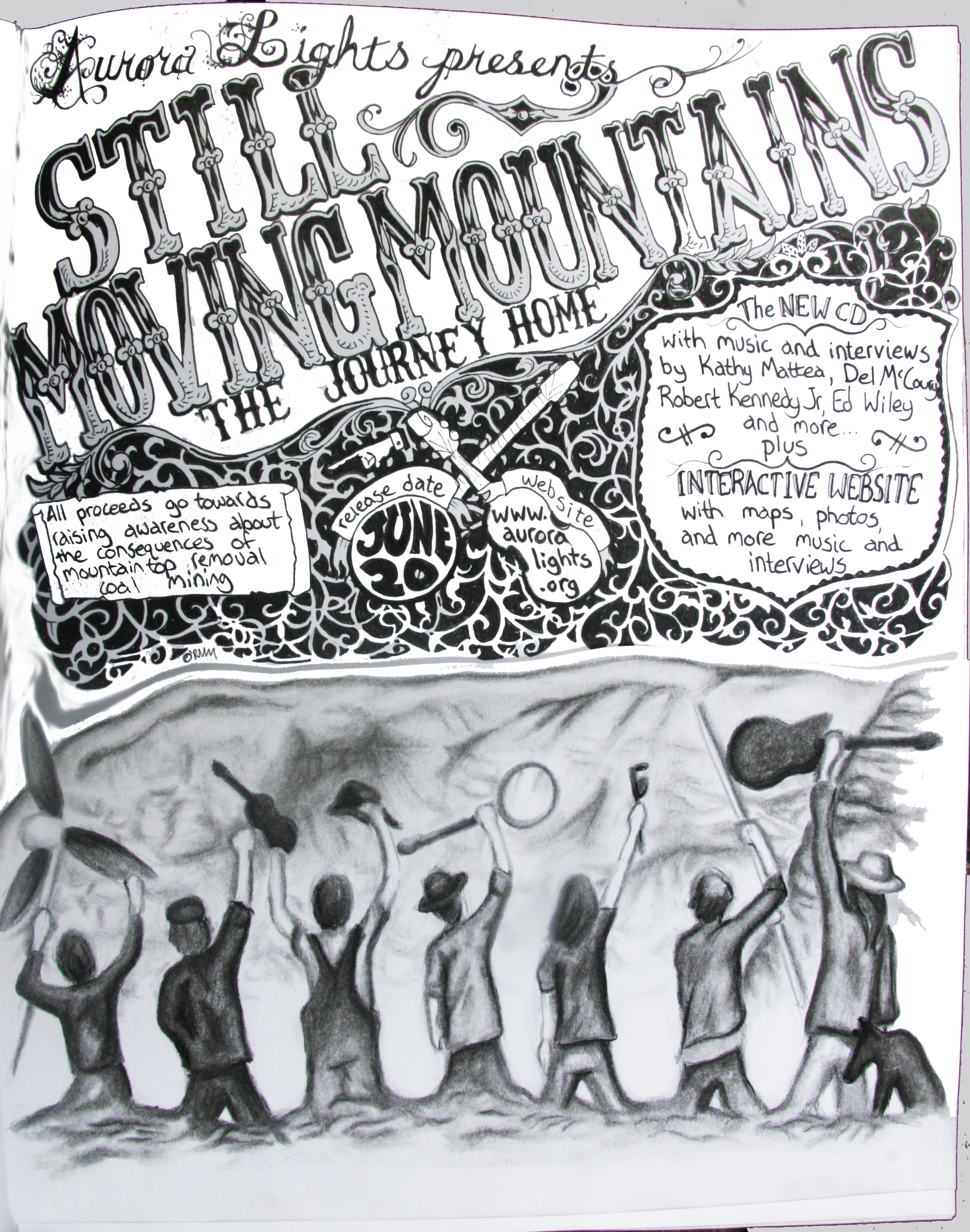
The original promotional posters for the album, kept here as downloads.
Aurora Lights' Concert Release of Still Moving Mountains: The Journey Home raises enough money to award first grant
The combination of profits from the new compilation CD and the August 23 benefit concert in Charelston, W.Va., has raised enough money to cover productions costs and allow for the first grant to be given to support the community kitchen in Rock Creek, W.Va. This volunteer kitchen feeds activists and community members living in the Coal River Valley, many of whom are working to end mountaintop removal. The grant provided three meals per day for up to 40 people for 12 days. "This grant helped put food on the table for hungry volunteers," said Dr. Robert Slusarenko, a full-time volunteer cook.
All proceeds from the album will be used for grants and other educational and charitable purposes consistent with Aurora Lights' mission to raise awareness of the impacts of mountaintop removal coal mining.
The first CD, Moving Mountains, which was released under Falling Mountain Music, raised more than $6,000 for local grassroots work. "The first CD was birthed with the idea that music could help inspire people to stand together through the hard times. What surprised me was how often the music and interviews were used in presentations and for outreach," Still Moving Mountains producer, Jen Osha, says. "I realized that Still Moving Mountains had to go further to provide people with a way to move from inspiration to education to action."
Headlining the benefit concert was the Morgantown-based, The Halftime String Band. Andrew McKnight, Osha and Samples with special guest Matt Parsons and the Nashville-based band The Lonetones. Coal River Valley residents spoke between the bands and told of how their lives have been changed because of mountaintop removal.
Still Moving Mountains will be released digitally through ThirtyTigers mid-winter. A unique combination of music, visuals, and community involvement, "Still Moving Mountains: The Journey Home" unleashes the passion and urgency empowering the coalfield justice movement in Appalachia at this critical time.
Still Moving Mountains combines interviews with local residents impacted by mountaintop removal with a mixture of local and well-known artists: Kathy Mattea, Del McCoury, Blue Highway, Everett Lilly and the Lilly Mountaineers, Great American Taxi, and Andrew McKnight. The CD goes hand in hand with Journey Up Coal River, a multimedia website featuring interviews, photographs, maps, and lesson plans centered around the Coal River Valley in southern West Virginia.
Watch coalfield residents speak about the impacts of the album and MTR:
Two dollar bill boys, two dollar bill Lost all my money but a two dollar bill I’m on my long journey home
Cloudy in the West and it looks like rain Looks like rain, boys, looks like rain Cloudy in the West and it looks like rain I’m on my long journey home
It’s dark and a raining and I want to go home Want to go home, boys, want to go home Its dark and a raining and I want to go home I’m on my long journey home
Homesick and lonesome and I’m feeling kind of blue Feeling kind of blue, boys, feeling kind of blue Homesick and lonesome and I’m feeling kind of blue I’m on my long journey home
There’s black smoke a rising and it surely is a train Surely is a train boys, surely is a train There’s black smoke a rising and it surely is a train I’m on my long journey home
Vocals, guitar: Del McCoury Mandolin: Ronnie McCoury Banjo: Rob McCoury Fiddle: Jason Carter Bass: Mike Bub
Way up on the mountain In the sweet southern air Is where I seem to lose loads I have to bear Silence of the snow fall and the peacefulness around I feel so blessed with all that I have found I feel so blessed with all that I have found
Chorus: Holler in the moonlight Sip the mountain shine The sound of the music playin’ Everything so fine Lookin’ up a trail for a sign as I travel there A liquor still, an old deer trail, or the home of a big old bear
Wouldn’t wanna mess with him because it is his home He’s like me he’s better left alone He’s like me he’s better left alone
Fishin’ in the river at the bottom of these hills
Helps me find my peace of mind In all these natural frills These mountains were the first to show their face up to the sky Lay me to rest here when I die Lay me to rest here when I die
Tim Stafford-Wayne Taylor-Shawn Lane-Jason Burleson-Rob Ickes/Daniel House Music, BMI Vocals, mandolin, fiddle: Shawn Lane Vocals, bass: Wayne Taylor Vocals, guitar: Tim Stafford Banjo, mandolin: Jason Burleson Dobro: Rob Ickes from Wind to the West (Rebel Records 1996)
Way back in the mountains on the High Knob by the ridge Grandpa built our cabin where he lived for forty years I spent my happy childhood beneath the hardwood trees I didn’t know what I had then was all I’d ever need
Mountain laurels blooming, it was early in the spring Looking out my window on a sea of endless green Rich man from the city came to buy our land today
It took two hundred years to grow, but it’s gone in thirty days
Mud slides down the mountain, there’s no way to stop the flood Hills without their timber’s like a man without his blood Scars upon the land, those wounds will never heal But a greedy man will never get his fill
Repeat chorus
I can’t go back and I know I never will I hope someday they know the way I feel
Ben Gilmer / Interview with Sylvia Bradford, Edwight, WV
“Cabin Creek Hollow” by Ben Gilmer, copyright 2005 Vocals & guitar: Ben Gilmer, Bass: Chris Printz, Mandolin: Aaron Martin Recorded, mixed and mastered by Mark Hodges, Mountain Fever Studios, Willis, VA
It’s hard livin’, down in Cabin Creek Hollow
The coal mines took my family, and now they’re takin’ my mountains.
And it’s hard livin’ But it’s all we know And it’s hard livin’ It’s time to let somebody know
I had the chance to work the steel mills, and move to Pittsburgh instead But I dug my money from the mountains, to keep the old homestead. Fifteen years in the darkness, breathing the black air of night Fifteen years I gave them, now I’ve come to organize.
And it’s hard livin’ But it’s all we know
And it’s hard livin’ It’s time to let somebody know
You come down here to take our minerals, and ship them way up north Meanwhile my back is broken, I ain’t got nowhere in the hell to go. Yeah I don’t want no handouts, I don’t wanna shake your hand - company man
I just want my mountains, we just wanna keep our land.
And it’s hard livin’ But it’s all we know And it’s hard livin’ It’s time to let somebody know
Recorded and mixed by Les Thompson at Cabin Studios, Leesburg, Va.
Verse 1 Granddad was a union man, worked deep beneath the ground said a prayer in the morning, and again to see the sun go down day from night by lantern light, to earn enough to eat by Saturday moon on the mountainside, the fiddle moved their feet
Verse 2 Went in the mines at fourteen, took a wife at twenty one raised five kids in the holler, like his daddy done the company cut costs and corners, everywhere it could still every Sunday they gave thanks, that they had it good
Chorus I know that times are changing, they say progress is good but do we honor honest work, like my granddaddy would the eagle soaring high, would he recognize this land built upon the sturdy backs, of those who made by hand
Verse 3 my daddy left these mountains for the mills of Ohio rolled the steel that won the war, far away from home back in granddad’s holler, big timber stripped the land laid railroad tracks that can’t bring back, the lives they’d made by hand
Chorus
Instrumental
Verse 4 I long for West Virginia, her hard blue rolling hills memories of childhood, I hear those echoes still our family stories vanished, no trace I could find they even tore the mountain down, where Granddad used to mine
From the 2008 CD "Coal," produced by Marty Stuart, released by Captain Potato Records. www.mattea.com Mandolin, harmony vocals: Marty Stuart Vocals, Acoustic guitar: Kathy Mattea Acoustic guitar: Bill Cooley Upright bass: Byron House Fiddle, banjo: Stuart Duncan Harmony vocals: Patty Loveless
Harmony vocals recorded by: Emory Gordy, Jr., at Cave 2 Studio, Atlanta, GA.
Recorded by Mick Conley at The Playground, Nashville, TN.
I remember the ways in the bygone days when we was all in our prime When us and John L. we give the old man hell down in the Blue Diamond Mine
Well the whistle would blow ‘for the rooster crow full two hours before daylight When a man done his best and earned his good rest at seven dollars a night
In the mines in the mines in the Blue Diamond Mines I worked my life away In the mines in the mines In the Blue Diamond Mines I fall on my knees and pray.
You old black gold you’ve taken my lung your dust has darkened my home And now I am old and you’ve turned your back where else can an old miner go
Well it’s Algomer Block and Big Leather Woods now its Blue Diamond too The bits are all closed get another job what else can an old miner do?
Now the union is dead and they shake their heads well mining has had it’s day But they’re stripping off my mountain top and they pay me eight dollars a day
Now you might get a little poke of welfare meal get a little poke of welfare flour But I tell you right now your won’t qualify ’till you work for a quarter an hour.
www.DebraCowan.com ; Recorded at Babyland Studio, Medford, MA. Produced by Mike Barry. Mixed by Huck Bennert. Published by Ignatius J. Publishing.
Who brought the flood, Mama? What did I do that was wrong? Did I bring the flood, and the rivers of mud? Mama, what did I do that was wrong?
You said faith could move mountains. You taught me right from wrong. But mountains come down, and black waters drown. Mama, what did I do that was wrong?
Who brought the flood, Mama? What did I do that was wrong? Was I wicked and bad Did I make God mad?
Mama, what did I do that was wrong?
You held my hand, Mama So I’d lie down and sleep all night long. But as I closed my eyes I heard you cry. Oh, Mama, what did I do that was wrong?
Mountains come down; black waters drown.
Mama, what did I do that was wrong?
You said we live off this mountain And the mountain takes care of its own Finding ginseng and ramps in the cool green and damp Mama, what will we do when it’s gone?
Who brought the flood, Mama?
What did I do that was wrong? Our mountain so strong is torn down and gone Mama, what did I do that was wrong?
Our mountain so strong Is torn down and gone Mama, what did I do that was wrong?
Osha, Samples and Farsetta / Interview with Debbie Jarrell, Rock Creek, WV
Music and Lyrics by Jen Osha Vocals, Piano: Jen Osha Vocals, Guitar: Grayson Samples Banjo: Vince Farsetta Bass: T.J. Larkin Snare Drum: Mark Poole
Recorded and mixed by Mark Poole at Zone 8 Studio, Morgantown, WV. Banjo and Bass recorded by T.J. Larkin at Larkin Sound, Nashville, TN.
Chorus
Danger above where our children play that dam of coal sludge could bust any day If this dam should break, like in Buffalo Creek All of our children are the first in its reach
We’ve asked Gov Joe to move our children away But he's bought and paid for, he won’t stand in their way So when the heavy rains come, mountain momma will wait To hear from her husband to evacuate
So sing for the children in their mountain homes Who hear rain on the roof and go to sleep in their clothes While their parents watch the water, cause nobody knows If tonight is the night the slurry dam will blow If tonight is the night the slurry dam will blow
After the storm a mountain dad Bulldozed earth to fix a break in the dam Worked 16 hours so the dam wouldn't break Called home to his wife, said the children are safe
He was almost done, one more hole to fill when he saw two bear cubs in their den in the hill Radioed his boss, said bears in the way Boss said, "stop working and you won't get your pay!"
So he dozed them in, heard them little bears cry Thought hard bout his kids and how they had to get by His body shook that night so he couldn't sleep For the first time his wife saw him break down and weep
So sing for the bear cubs snuggled safe underground In their dens with their mommas when the mountain comes down I say what is it worth, this cheap fuel we’ve found When her babies are buried, and our children might drown
Maybe it was the worry (water's rising) His wife sounded scared on the phone Maybe it was the long night (I'll be home soon) Up on the dozer alone Maybe it was the knowing (What have I done) He'd killed those bears in their den But something moved inside him He knew he had reached his end He'd never work on that slurry dam again
Music by Mike Morningstar Lyrics by Steve Morningstar Vocals, guitar, harmonica- Mike Morningstar Mandolin- Rick Roberts Recorded by Jeff Bosley
Buffalo Creek swelled and broke and all it’s water came roaring down Sweeping away the homes and lives in a West Virginia town And in that cold and raging flood more than a hundred people drowned
Some say the flood was caused by rain and some say melting snow But deep down in my heart I think the coal mine bosses know
They strip off all the topsoil and uproot all the trees They killed those folks in Buffalo Creek now shrug the blame with ease Don’t give a damn for life or land they just roll on like they please
The Governor said the flood was just an act of God’s own will But the strippers tear these mountains down it’s enough to make me ill The rape of Appalachia for a greenback dollar bill
Buffalo Creek Buffalo Creek, a coal mine bosses’ show Buffalo Creek Buffalo Creek, how could thay sink so low
How can we let this kind of thing go on before our eyes When coal mine bosses trade our lives for nickels and for dimes I beg you folks to stop these men, don’t let this happen twice Can’t you see those people drowning there, can’t you hear their mournful cries
I hear them in the falling rain they haunt me in the snow Buffalo Creek Buffalo Creek, a coal mine bosses’ show Buffalo Creek Buffalo Creek, when will you people know And when will you folks tell these boys to pack their gear and go
Album available at: www.thelonetones.com Lead vocals and banjo: Sean McCollough Vocals and guitar: Steph Gunnoe Vocals and bass: Maria Williams Drums: Phil Pollard
Drunk my water from the well, grown my food upon this land
But the changes I see comin’ are tearin’ at my heart Cause there ain’t nothin’ better than the original plan And these mountains are state of the art State of the art, state of the art These changes I see comin’ are tearin’ at my heart
Cause these mountain’s are state of the art They come with their draglines to strip out the coal They ruin our water, tear our homeland apart They say they’ll put it back better than before But these mountains are state of the art State of the art… They come by the truckload to bury their waste Tell me when will it stop, once the poisoning starts
They say they’ll protect us with technology’s grace But these mountains are state of the art State of the art… When the trees are all gone and the mountains are flat I guess they’ll build some new condos or a bigger Walmart They say this is progress, but I don’t know about that Cause these mountains are state of the art State of the art…
I’ve got that sweet mountain soul down in my bones And I can feel it when I sing them lonesome songs
And I can tell by the way I feel That it comes from somewhere real Got that sweet mountain soul down in my bones I’ve got that sweet mountain spirit in my veins And it flows through my heart like a mountain rain And no matter where I might roam These hills and hollers are still my home Got that sweet mountain spirit in my veins
(CHO) Some people call me Hillbilly Some people call me Mountain Man Well, you can call me Appalachia 'Cause Appalachia is what I am
I’ve got that sweet Appalachia all over me Look at me and Appalachia is what you see
And no matter where I might roam Appalachia is still my home Got that sweet Appalachia all over me I’ve got that sweet mountain soul down in my bones Got that sweet mountain spirit down in my veins Got that sweet Appalachia all over me
Keith and Joan Pitzer / Interview with Danny Williams, Clay’s Branch, WV
Music & lyrics by Keith Pitzer Vocals, guitar: Keith Pitzer Vocals, bass: Joan Pitzer Mandolin: Jake Pitzer Banjo: Bob Shank Recorded by Bob Shank at Otter Slide Studio, mastered by Jeff Bosley
From the CD “Gathering Stones” on Falling Mountain Music
No use wondering all the time where the money went Made a little but it’s always spent No use worrying how we’ll pay to fix that old car That old thing never did get us too far I don’t care, no I don’t care, living in these mountains of blues (2x)
No use working all day long for that dollar bill Work a few years and you’re over the hill No use crying all night long for what can’t be done Live tomorrow when tomorrow comes I don’t care, no I don’t care, living in these mountains of blues (2x)
Think I’ll take my fishing pole to the wild trout stream
There to let my spirit float and dream
Think I’ll take my walking stick to the trail so high There to let my spirit float on by
I don’t care, no I don’t care, living in these mountains of blues (2x)
Written by V. Herman and Chad Staehly; Hermdog Music, BMI Vocals, acoustic guitar: Vince Herman Keyboards: Chad Staehly Bass: Brian Schey Drums, vocals: Jake Coffin Electric guitar, vocals: Jefferson Hamer Pedal Steel: Eben Grace
Mountains are falling getting pushed aside I cant find that stream that ran cool and wide Now its all been covered up by that old mountainside Where they’re looking for old black coal
I thought my kids found a way to work in these mountain towns When they took jobs down in the mines underground
Now the jobs and the money and the mountainsides are all gone ‘Cause it just takes one machine now, to tear a mountain down
Well you can tear at a mountain You can wash it down below But you cant take the heart out of this Appalachian Appalachian soul
I love West Virginia, old Kentucky and Tennessee
Those old mountains boys have been home sweet home to me When I see them tearing ‘em down, I find it just too hard to believe It’s just for that old black coal
Wish that I could walk beside that cool mountain stream once more But once they’re gone you know they’re gone forevermore So I’m going back home I’m gonna speak my mind
I aint gonna let ‘em take no more Well you cant tear out a mountain when a mountain’s in your soul
Well you can tear at a mountain Try to wash it down below But you can’t take the heart out of this Appalachian Appalachian soul
See I believe in a revolution, I believe it is a hell, I believe in it, take care of it daily daily on demand because... I am a blacksmith of metal and words and a sheep that pitch black too, and in this life spun short in the span of things I believe there's a bit more that we ought to be trying Cause 500 hundred years ago, when these trees were more dense, and the colors pristine, so the chaos made sense. There was no knowing of loss of a mountain, the whole mountain that I call home and these same hills roll on and on, without mention of vanish or where fools belong and these same mountains that go to peace long before the noose, and now that soon is really gone, now that too is nearly gone so tell me what have we done as a civilization to destroy in our own wake that metaphorical hand that feeds us we are trashing our own birthday cake and I consider myself a skeptic but I'm optimist in soul and we are all getting force fed, we are led around like the bull and he is huge and rageful and somehow subdued and hauled by those thick rings so don't you too shut out the filthy, nasty, sticky truth of things So here we go, get the fuck out your car, walk, it's good for you stop consuming blindly, get by on what you do have and then scale that down too
Take a long hard look at you It starts there, we all got a lot to say about everybody else its our own transgression that always tends to melt into who's fault who's blame who's wrong, but each and everyone of us is doing something its too hard, too fast, too long and there's none but ourselves to make this thing last, none but ourselves to make this thing last... Stand up look around and scale that down too
It starts there, take a long hard look at you, you stand up, look around and then you scale that down too