Legislation, Permits, Regulations
Federal legislation with room for interpretation
How does the law treat Mountaintop Removal? Laws at the state and federal level regulate mountaintop removal coal mining and its environmental impacts, require varying levels of public participation, and apply varying amounts of scrutiny in the permitting process. This section will explore the governmental institutions that exert influence over mountaintop removal coal mining, the laws that regulate it, and potential changes in the law. There is great dispute as to whether or not regulations and their enforcement sufficiently safe-guard the health, safety, and well-being of communities living near mountaintop removal sites and the surrounding environment, so both law as written and law as applied will be explored in this section.
National Environmental Protection Act
[Illustration no longer available: the source site has removed it.]
The National Environmental Protection Act was passed in 1970 in order to monitor the environmental impact of federal agency actions and decisions. The act created a Council on Environmental Policy, required environmental impact statements and a process to solicit public input to include environmental concerns in federal agency decision making.
The National Environmental Protection Act was passed in 1970 in order to monitor the environmental impact of federal agency actions and decisions. The act created a Council on Environmental Policy, required environmental impact statements and a process to solicit public input to include environmental concerns in federal agency decision making.
In the case of mountaintop removal and valley fill permitting, coal companies prepare and submit an Environmental Impact Statements (EIS) for each permit. In theory, these statements assess the potential impact of mining on the environment. The Army Corps of Engineers is empowered to issue Finding of no Significant Impact (FONSI) documents which supersede any concerns that may be present in the EIS by explaining why the Corps has concluded that there are no significant environmental impacts resulting from the granting of a permit. In the past, this power has been used to streamline the permitting process, despite the obvious impacts of mountaintop removal mining.
Instances exist where permits were granted despite inadequate EIS statements, and then challenged in court. For example, as part of a settlement agreement from the Bragg vs Robertson (Civ. No. 2:98-0636 (S.D. W.V.) case ,the EPA, the Corps, the U.S. Interior Department's Fish & Wildlife Service and Office of Surface Mining, and the West Virginia Department of Environmental Protection (DEP), prepared an environmental impact statement (final EIS) looking at the impacts of mountaintop mining and valley fills.
More information is available in the Citizen's Guide to NEPA.
 Listen to Ernie Thompson, resident of Horse Creek and former mine inspector, talk about the changes in law regarding valley fills.
individual permit. In this way, many valley fills were created when a nationwide permit was granted and residents did not notice until dumping began. Beginning with a court victory for advocates against mountaintop removal in 2007, Nationwide 21 permits were declared in violation of the Clean Water Act. This ruling remained in effect until the Fourth Circuit Court overturned it in early 2009.
Listen to Ernie Thompson, resident of Horse Creek and former mine inspector, talk about the changes in law regarding valley fills.
individual permit. In this way, many valley fills were created when a nationwide permit was granted and residents did not notice until dumping began. Beginning with a court victory for advocates against mountaintop removal in 2007, Nationwide 21 permits were declared in violation of the Clean Water Act. This ruling remained in effect until the Fourth Circuit Court overturned it in early 2009.
Clean Water Act
Congress passed the Clean Water Act (CWA) in 1972 with the intention of resolving the crisis of America's polluted waterways and wetlands. The CWA combines regulatory and non-regulatory tools in attempting to rid current water systems of pollutants, while attempting to stem the development of new polluted waterways and wetlands. In order to safeguard against the dumping of waste and pollutants into waterways, the Act forbids all dumping (except for specific agricultural uses) that is not approved by the Army Corps of Engineers.
Surface mines are required to obtain a National Pollutant Discharge Elimination System (NPDES) permit, which is regulated under the CWA. In West Virginia, the DEP has primacy of enforcement of the NPDES permits with EPA acting as the federal oversight body. These permits cover all pollutants discharged off the site and into the waters of the United States, restricting effluent limits and requiring the site operator to explain in the mining plan how it will meet those limits and treat what's running off the site, among other requirements.
Valley Fill, or 404, Permits
If a mining plan calls for valley fills, a 404 permit must be obtained, which is an exemption to Subsection 404 of the CWA which allows the Corps to issue variances to fill in an intermittent or perennial stream. EPA follows the United States Geological Survey's definitions for streams: an intermittent stream holds water during wet portions of the year and a perennial stream holds water throughout the year.
The Corps does not have authority over water quality, that's the jurisdiction of the EPA who oversees this permit. However, since anything that interferes with the flow of the water of the United States is regulated by the Corps, the Corps administers valley fills. This is the only part of surface mine permitting where the state does not have primacy of enforcement.
"The thing that's ironic here is that the fill rule was originally developed for developers seeking to build, and this was intended for very small projects, primarily for filling in wetlands for building things like subdivisions and shopping malls," Sludge Safety Project staffer Mathew Louis-Rosenberg said. "So, the division that handles these permits is the Division of Wetlands. Within that, the standards that are developed, that are currently used to determine the environmental impact of a fill, were developed for wetland ecosystems.
"We can't allow them to continue to keep issuing permits. Look at what they're using to evaluate them. It's an ecosystem that bears no resemblance to what we're evaluating." The people who authored the guidelines testified to Joe Lovett, a West Virginia lawyer who's only tried cases aimed at ending mountaintop removal, that the methodology they developed was not appropriate for this ecosystem. "The people who literally wrote the book they use to decide whether they should issue a permit, said it's inappropriate," Louis-Rosenberg said.
There's two types of valley fill permits: individual and Nationwide 21. Large sites are supposed to obtain an individual permit, which carries a more stringent set of regulations requiring more data and proof that the project will not have an adverse impact on the environment. However, Nationwide 21 allows the Corps to issue a blanket permit for small things and, unlike the individual permits, does not require a public hearing.
Coal companies saw the value in nationwide permits, and would often break up large valley fills into smaller pieces in their permit applications in order to avoid the regulatory oversight of an
Listen to Ernie Thompson, resident of Horse Creek and former mine inspector, talk about the changes in law regarding valley fills.
Surface Mining Control and Reclamation Act (SMCRA)
On February 16th, 1972, a coal slurry impoundment ruptured in Buffalo Creek, W.Va. The rushing tidal wave of sludge killed over 120 people and left many thousands homeless, yet several days before the rupture a federal inspector had found the dam site in "satisfactory" safety. The dangers of strip mining had long been of concern to coalfield residents.
On February 16th, 1972, a coal slurry impoundment ruptured in Buffalo Creek, W.Va. The rushing tidal wave of sludge killed over 120 people and left many thousands homeless, yet several days before the rupture a federal inspector had found the dam site in "satisfactory" safety. The dangers of strip mining had long been of concern to coalfield residents.
The increased mechanization of strip mining that left many union mining jobs and the encroaching growth of strip mines combined to spark a powerful grassroots movement to abolish strip mining. The tragedy of the Buffalo Creek Flood stoked these flames and five years later, in response to the growing political pressure from Southern Democrats and coalfield residents, Jimmy Carter signed the Surface Mining Control and Reclamation Act in 1977.
It did not abolish strip mining, instead stating that its primary goal was to "establish a nationwide program to protect society and the environment from the adverse effects of surface coal mining operations." To do so, it created the Office of Surface Mining in the Department of the Interior and the regulations for them to enforce. The surface mines constructed before SMCRA are often referred to as "pre-law," while those after are called "post-law."
The SMCRA permit is the whole mining plan, top to bottom, including the blasting plan. The DEP administers SMCRA permits but, unlike the NPDES permits, the Interior Department's Office of Surface Mining and Reclamation maintains oversight. The DEP's Office of Explosives and Blasting also approves the blasting plan within the SMCRA permit. A typical Environmental Impact Statement is also required here, "but they usually don't get filled out," Louis-Rosenberg said.
SMCRA requires that "all surface coal mining operations back-fill, compact... and grade in order to restore the approximate original contour of the land with all high-walls, spoil piles and depressions eliminated." However, the WVDEP regularly grants exceptions to the Approximate Original Contour (AOC) rule. This despite one of the act's goals: to "assure that surface mining operations are not conducted where reclamation as required by this Act is not feasible."
Since 1977, the following language was added to SMCRA, weakening this goal:
Since 1977, the following language was added to SMCRA, weakening this goal:
In cases where an industrial, commercial, agricultural, residential or public facility (including recreational facilities) use is proposed or the postmining use of the affected land, the regulatory authority may grant a permit for a surface mining operation of the nature described....after consultation with the appropriate land use planning agencies, if any, the proposed post mining land use is deemed to constitute an equal or better economic use of the affected land as compared to pre mining use.
This clause allows coal companies to not restore a site's AOC, as long as it is put to a better economic or social use than it was before. Under this clause, prisons and a golf course have been constructed on mountaintop removal sites. One such prison has earned the name Sink-Sink because it does just that. The mountains, and the ecosystems they support, have an intrinsic cultural value to the residents of the Coal River Valley that cannot be measured in monetary terms, and yet under SMCRA the economic value of the land supersedes all others.
Mining Safety and Health Administration Permit
The federal Mining Safety and Health Administration oversees the regulatory structure of the mines. All mines have to pass muster on the safety of operating the mine and this is all detailed in the MSHA plan the coal companies must file. Part of MSHA's responsibility is approval and inspection of coal slurry dams. MSHA focuses on the safety aspect of the structures, not their environmental impacts.
Sylvia_Bradford1-max.mp3Sylvia Bradford clip 1hazy-04-hazy-and-shumates-today
Sylvia_Bradford2-max.mp3Sylvia and Rick Bradford on how MTR has affected their liveshazy-04-hazy-and-shumates-today
Sylvia_Bradford3-max.mp3The Bradfords and trainshazy-04-hazy-and-shumates-today
debbie_jarrell-1-max.mp3Debbie Jarrell on disappearing housing stockhazy-04-hazy-and-shumates-today
Charles-EdClip3.mp3Ed Wiley on the Appalachian Mtns. and waterhazy-04-hazy-and-shumates-today
Sylvia_Bradford5-max.mp3The Bradfords on lack of accesshazy-04-hazy-and-shumates-today
debbie_jarrell-1-max.mp3Debbie Jarrell on Marsh Fork Elementarycoal_river_101-06-changes-in-lifestyle
debbie_jarrell-2-max.mp3Debbie Jarrell on lack of access to the mountainscoal_river_101-06-changes-in-lifestyle
MTR2CharlieBEdit1.mp3Charles Ballard on changes since MTRcoal_river_101-06-changes-in-lifestyle
BettyRoss.mp3Betty Ross on Floodingcoal_river_101-06-changes-in-lifestyle
Meadows1.mp3Jimmy Meadows on outmigrationcoal_river_101-05-outmigration
judy_crm_clip1.mp3Judy Bonds on Coal River Mountaincrm-01-current-land-use-on-coal-river-mountain
Charles-EdClip2.mp3Ed Wiley on Health Effects at MFEhazy-02-marsh-fork-elementary
Thompsonclip1.mp3Ernie Thompson on Slurry Impoundmentsmtr-02-environmental-impacts
Thompsonclip2.mp3Ernie Thompson "Money got in the way"mtr-03-legislation-permits-regulations
Maria1.mp3Maria Lambert on Water Qualityprenter-04-health
Rory-GB4.mp3Gary Anderson on Coal River Windwind-01-introduction-to-coal-river-wind
Rory-GB3.mp3Barbara Anderson discusses Mountain Access and Traditional Usewind-01-introduction-to-coal-river-wind
Rory-Chuck1.mp3Chuch Nelson on Threat of Valley Fills on Coal River Mountainwind-02-the-threat-of-mtr-on-coal-river-mountain
Rory-GB2.mp3Gary Anderson describes 2001 Clear Fork Floodswind-02-the-threat-of-mtr-on-coal-river-mountain
Rory-Chuck4.mp3Chuch Nelson "We gotta shut 'em down"wind-02-the-threat-of-mtr-on-coal-river-mountain
Rory-Judy2.mp3Judy Bonds "The Last Vestige of Jobs and Sustainability"wind-03-the-coal-river-mountain-wind-campaign
Rory-GB5.mp3Gary Anderson Imagines a New Wind Industrywind-04-wind-vs-mtr-for-coal-river-mountain-the
Rory-Chuck3.mp3Chuck Nelson "This is Our Last Chance"wind-06-a-just-transition
MTR2VernonHEdit1B.mp3Vernon Haltom on Protecting Places and Resourcescrm-01-current-land-use-on-coal-river-mountain
EdWileyInEdit1.mp3Ed Wiley "A Magical Place"crm-02-community-land-use-in-coal-river-valley
Meadows1.mp3Jimmy Meadows on Loss of Underground Mining Jobscrm-03-undergound-mining
Charles-EdClip1.mp3Ed Wiley on Sludge Impoundmentshazy-02-marsh-fork-elementary
238002.mp3Laffon Pettry, "Molly mooching"crm-02-community-land-use-in-coal-river-valley
080009.mp3Donna Wills, "nothing I can't can"crm-02-community-land-use-in-coal-river-valley
074025.mp3Randy Halstead, Joys of ginsengincrm-02-community-land-use-in-coal-river-valley
077007.mp3Joe Aliff, harvest timecrm-02-community-land-use-in-coal-river-valley
088006.mp3John Bowman, keeping the mash warmcrm-02-community-land-use-in-coal-river-valley
050002.mp3Benny Turner, Native Americans on Bolt Mtn.coal_river_101-01-history-of-coal-river-part-1
077010.mp3Joe Aliff and his Cherokee grandfathercoal_river_101-01-history-of-coal-river-part-1
119011.mp3Howard Miller, corn-woodland-pastureland systemcoal_river_101-01-history-of-coal-river-part-1
215001.mp3Howard Miller, people hiding on mtn. from marauding soldierscoal_river_101-01-history-of-coal-river-part-1
Joe_Aliff_we_had_a_full_fledged_war_077022.mp3Joe Aliff, arming miners for Battle of Blair Mtn.coal_river_101-02-history-of-coal-river-part-2
046012.mp3Mae Bongalis, a visit with Mother Jonescoal_river_101-02-history-of-coal-river-part-2
141006.mp3Cody Dickens, a visit from the land companycoal_river_101-04-absentee-land-ownership
162008.mp3Dr. Jim Michael Wills of Rock Creek on absentee landownershipcoal_river_101-04-absentee-land-ownership
038002.mp3Shorty Bongalis on West Virginians migrating to Ohiocoal_river_101-05-outmigration
088003.mp3John Flynn about moonshinincoal_river_101-05-outmigration
088004.mp3John Bowman, staying in Coal River by moonshinincoal_river_101-05-outmigration
077024.mp3Joe Aliff, how Coal River Mtn. is a drug storecrm-01-current-land-use-on-coal-river-mountain
Thompsonclip1.mp3Ernie Thompson, former mine inspector on slurry impoundmentscrm-05-the-brushy-fork-slurry-impoundment
Jen-JackSpaderoClips.mp3Jack Spadero, engineer on impacts of MTR and slurrycrm-05-the-brushy-fork-slurry-impoundment
Rory-GB4.mp3Gary Anderson, Coal River Mountain Wind campaignwind-06-a-just-transition
Rory-Judy1.mp3Judy Bonds, coal is NOT West Virginiawind-06-a-just-transition
hazy-01-near-the-mouth-of-hazy1hazy3
coal_river_101-01-history-of-coal-river-part-11coal-river-1011
crm-01-current-land-use-on-coal-river-mountain1crm2
prenter-01-prenter-and-surrounding-communities1prenter4
mtr-01-introduction1mtr6
wind-01-introduction-to-coal-river-wind1wind7
cresources-01-community-resource-mapping1cresources5
hazy-02-marsh-fork-elementary2hazy3
coal_river_101-02-history-of-coal-river-part-22coal-river-1011
crm-02-community-land-use-in-coal-river-valley2crm2
prenter-02-water-quality2prenter4
mtr-02-environmental-impacts2mtr6
wind-02-the-threat-of-mtr-on-coal-river-mountain2wind7
cresources-02-children-are-the-future-of-the-coal-rive2cresources5
hazy-03-absentee-land-ownership3hazy3
coal_river_101-03-glimpse-into-a-coal-river-family-mid-20t3coal-river-1011
crm-03-undergound-mining3crm2
prenter-03-coal-slurry3prenter4
mtr-03-legislation-permits-regulations3mtr6
wind-03-the-coal-river-mountain-wind-campaign3wind7
cresources-03-bill-lucas3cresources5
hazy-04-hazy-and-shumates-today4hazy3
coal_river_101-04-absentee-land-ownership4coal-river-1011
crm-04-forest-resources-and-timbering4crm2
prenter-04-health4prenter4
wind-04-wind-vs-mtr-for-coal-river-mountain-the4wind7
cresources-04-chronicling-the-coal-river-valley-s-coal4cresources5
hazy-05-update-lawsuits-possible-new-location-fo5hazy3
coal_river_101-05-outmigration5coal-river-1011
crm-05-the-brushy-fork-slurry-impoundment5crm2
prenter-05-community-responses5prenter4
wind-05-wind-vs-mtr-for-coal-river-mountain-ener5wind7
cresources-05-clear-fork-couple5cresources5
coal_river_101-06-changes-in-lifestyle6coal-river-1011
crm-06-community-letter-to-w-va-gov-joe-manchin6crm2
prenter-06-stories-from-prenter6prenter4
wind-06-a-just-transition6wind7
cresources-06-connie-and-terry-dillon6cresources5
prenter-07-news7prenter4
wind-07-update-blasting-has-begun-on-coal-river7wind7
cresources-07-danny-cook-and-mack-james-creek7cresources5
wind-08-organizing-for-wind-power8wind7
cresources-08-debbie-jarrell8cresources5
cresources-09-delbert-and-judy-gunnoe9cresources5
cresources-10-elmer-mays-horse-creek10cresources5
cresources-11-frankie-mooney11cresources5
cresources-12-gary-and-barb-anderson12cresources5
cresources-13-jimmy-platt13cresources5
cresources-14-junior-walk14cresources5
cresources-15-justin-wills15cresources5
cresources-16-kathleen-dickens16cresources5
cresources-17-kay-and-danny-howell17cresources5
cresources-18-kendra-dickens18cresources5
cresources-19-lonnie-burnside19cresources5
cresources-20-project-build-it-up-wv-summer-youth-prog20cresources5
cresources-21-project-community-greenhouse21cresources5
cresources-22-project-first-solar-thermal-installation22cresources5
cresources-23-project-greenhouse-gardens23cresources5
cresources-24-project-mural-project-in-whitesville24cresources5
cresources-25-project-the-tadpole-project25cresources5
cresources-26-rachel-bey26cresources5
cresources-27-ray-and-lottie-cottrell27cresources5
cresources-28-sandy-simmons28cresources5
cresources-29-shannon-dickens29cresources5
cresources-30-sharon-thompson30cresources5
cresources-31-sheila-and-natasha-walk31cresources5
cresources-32-sherry-geisler32cresources5
cresources-33-wilma-cook33cresources5
Charles Ballardcoal_river_101-06-changes-in-lifestyle

Judy Bondscrm-01-current-land-use-on-coal-river-mountain
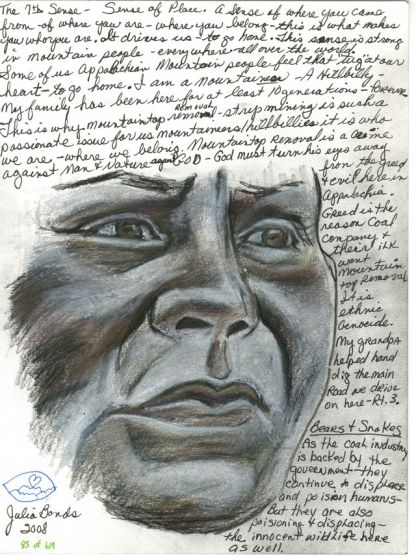
Judy Bonds, 1 of 3coal_river_101-01-history-of-coal-river-part-1
Judy Bonds, 2 of 3coal_river_101-01-history-of-coal-river-part-1
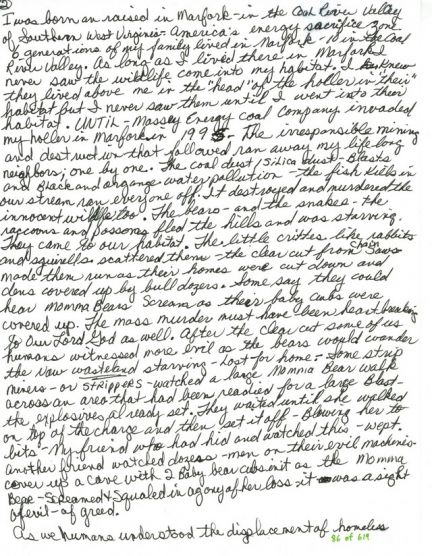
Judy Bonds, 3 of 3coal_river_101-01-history-of-coal-river-part-1
Sarah Haltomcrm-01-current-land-use-on-coal-river-mountain

Vernon Haltomcrm-01-current-land-use-on-coal-river-mountain

Vernon Haltomhazy-02-marsh-fork-elementary
Debbie Jarrellcoal_river_101-06-changes-in-lifestyle

Debbie Jarrellhazy-04-hazy-and-shumates-today
Debbie Jarrellwind-01-introduction-to-coal-river-wind
Debbie Jarrellhazy-02-marsh-fork-elementary
Debbie Jarrellcoal_river_101-05-outmigration
Jen Oshacrm-03-undergound-mining

Jen Oshacoal_river_101-06-changes-in-lifestyle
Jen Oshahazy-04-hazy-and-shumates-today
Jen Oshacrm-05-the-brushy-fork-slurry-impoundment
Jen Oshaprenter-07-news
Jen Oshacrm-04-forest-resources-and-timbering
Jen Oshahazy-01-near-the-mouth-of-hazy
Jen Oshahazy-02-marsh-fork-elementary
Ed Wileyhazy-02-marsh-fork-elementary
Ed Wileyhazy-04-hazy-and-shumates-today
Ed Wileycrm-02-community-land-use-in-coal-river-valley
Ed Wileycoal_river_101-06-changes-in-lifestyle