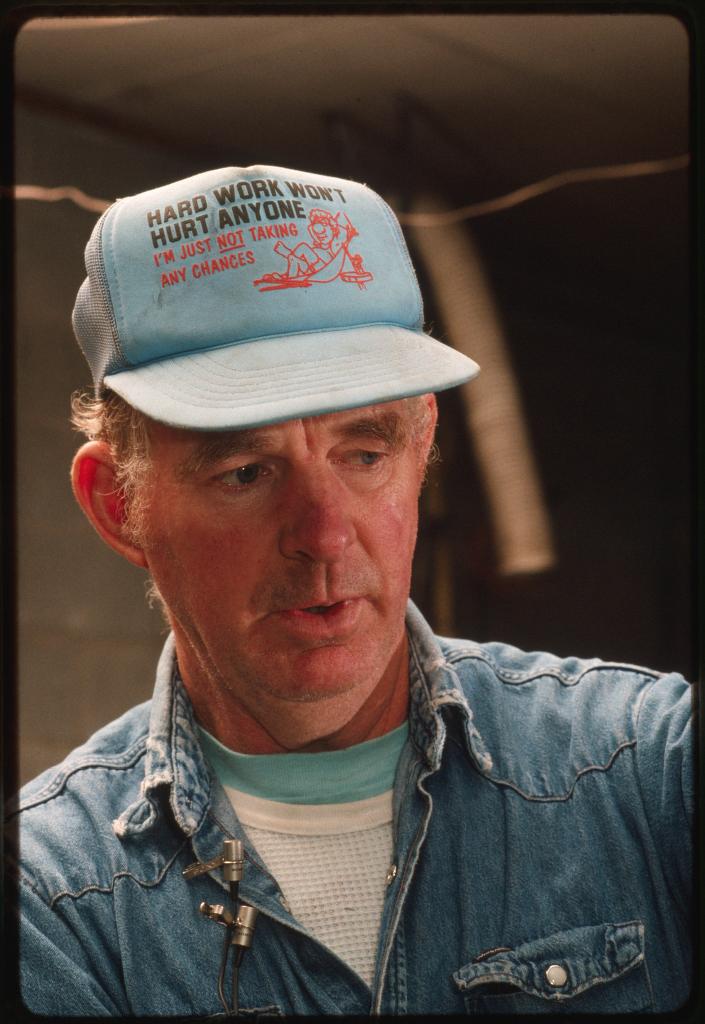
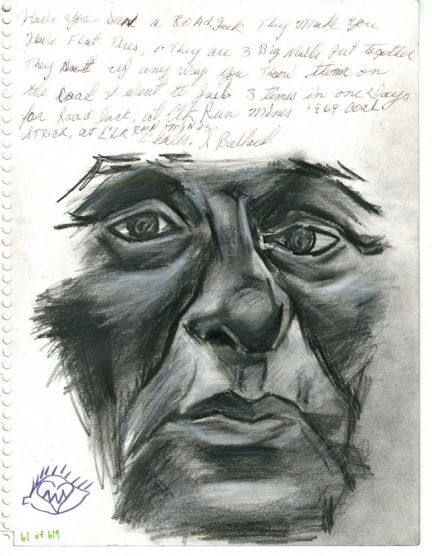
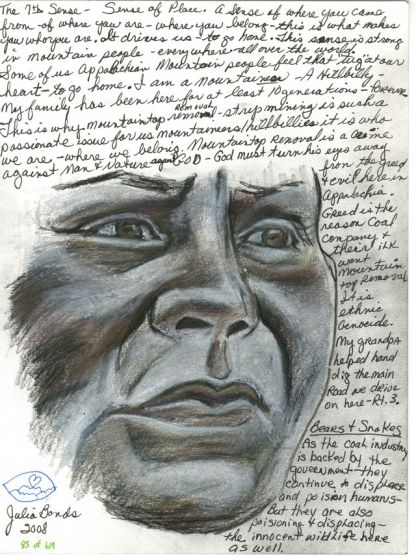
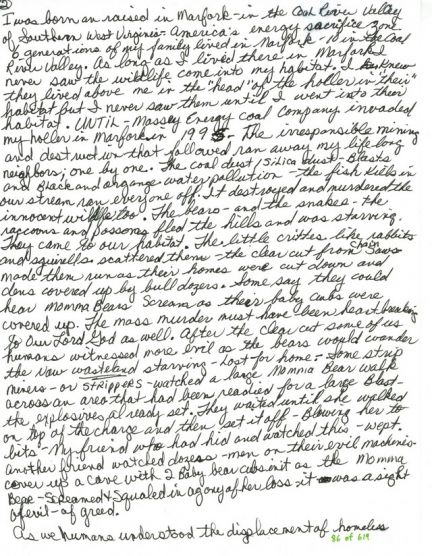
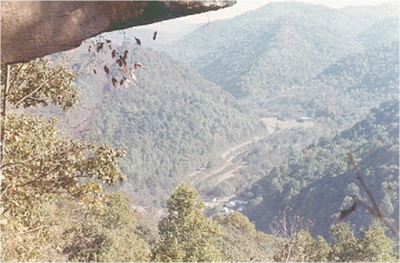
But, you know, we don't own [Coal River Mountain], that belongs to the land company, but people have used that mountain for generations, for whatever purpose they want to go up there for. There hadn't ever been any conflict or reason not to let them keep using it. It's a big place. I think there's enough room up there for everybody." Alan Rich, Whitesville.
Photo by Rick Bradford.
Coal River Valley as a Commons
Community land use in Appalachia is strongly connected to the heritage of early settlers and the lessons learned from their Native American precursors. Early settlers used their surrounding ecosystems to create an economy based on gardening, gathering and hunting that provided the backbone to a multiple livelihood strategy as the railroads and resource extraction industries penetrated the region. As many residents of Coal River Valley moved into the mining and timbering industries, these multiple livelihood strategies continued to provide important means of gaining alternative income and a bulwark against exploitative practices of outside corporations.
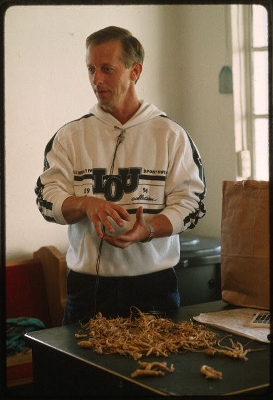
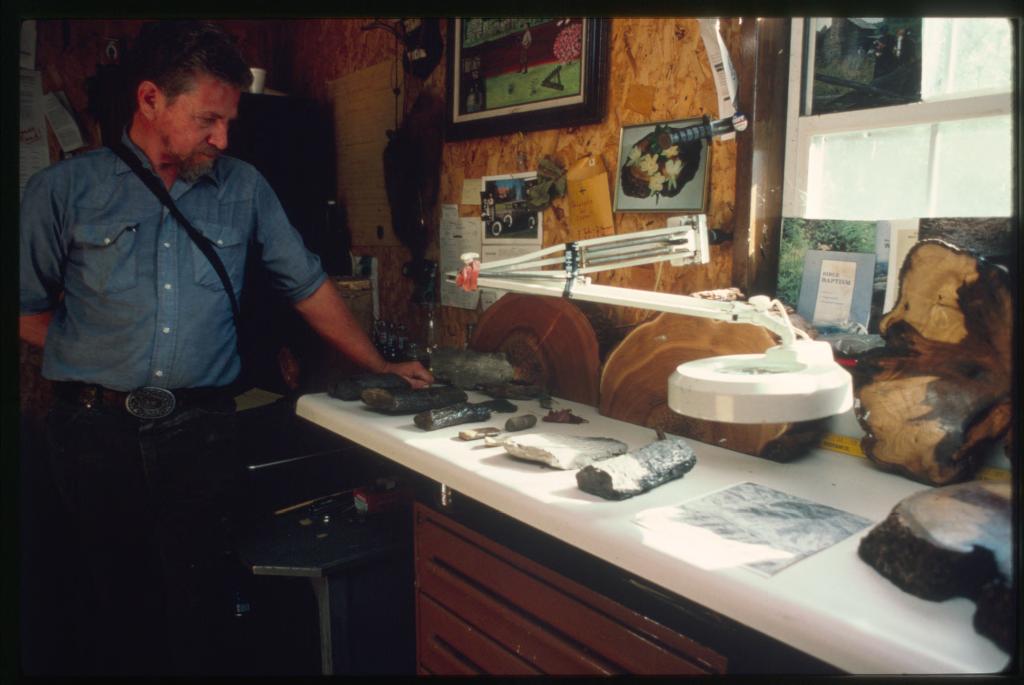
Randy Halstead, owner of Randy’s Recycling in Peytona in Boone County. Tending the Commons photo by Lyntha Scott Eiler, Courtesy American Folklife Center, Library of Congress.
Multiple livelihood strategies in Appalachia are strongly linked to the agrarian heritage and are thus deeply connected to the surrounding land and community relationships. Jefferson Boyer, in his work “Reinventing the Appalachian Commons,” defines the basic multiple livelihood strategy when he states “they [Appalachian peoples] obtained these shared resources by employing a strategy of multiple livelihoods, including gardening and cash cropping, buying and selling in periodic markets, and working in factories and in the service sector.”[1] Boyer goes on to explain that this strategy “reflects patterns derived from the myriad tasks of small-scale farming with limited mechanization across much of Appalachia.”[2] In terms of Coal River Valley, the small-scale gardening and cash cropping was slowly supplanted (though remaining an important nutritional supplement) by the primary mode of income by wage earning in the timbering and coal mining industries, to which the periodic markets of ginseng and other crops provided supplementary income. Randy Halstead, a Ginseng trader in Coal River Valley, explained to Mary Hufford and Lyntha Eiler the importance of multiple livelihood strategies for miners struggling to unionize :
We had to do it when I was at home. That was the only way that we had the money—my dad was a coal miner and there was the union that they were discussing organizing and he was involved in that. So a lot of times we were out of work and when you have to send ten or twelve children to school and you’re only working every now and then you had to find money any way you could. So we would dig ginseng to get money to buy school clothes so we could go back to school in the fall. [3]
Thus the use of the land as a commons by community members was important not only for strengthening communities and maintaining culture and heritage, but also as a way to fight exploitation in both the cultural and material realms.
The strategy of multiple livelihoods has relied on the idea and practice of the commons, an idea and practice that predates but does not preclude private property. Most of the land on Coal River is privately owned, and much of it is “owned” by absentee land companies who in their course of dealing with communities on Coal River for more than a century encouraged the traditional uses of the land that allowed people to survive the boom and bust cycles of the mono-economy of coal. The resources of land, waterways, and forests have never historically been completely private. The public stake in how they are used is affirmed in legislation that protects the quality of air, water, soil, and cultural properties on which community life depends. As Mary Hufford pointed out in “Weathering the Storm: Cultural Survival in an Appalachian Valley”:
"We might think of commons in two senses here. One is the sense in which resources like air and water cannot be privately owned. Protecting their quality is in the public interest. The second is the sense in which the commons forms a realm of public discourse to which every citizen in a democracy should have access. This realm of public discourse is necessary for the cultivation of any kind of common world. Common worlds – whether national or local – are created around the physical resources in which the community has a stake – such as rivers, parks, mountains, and forests. When such resources are reduced to private property, the common worlds anchored in them disappear. On Coal River, soil, water, and forest anchor a common world that is generations deep." (Footnote: An Appalachian Tragedy p. 150)
Mountaintop removal coal mining has led to a change in corporate attitudes towards land use, and is a veritable closing of the Appalachian commons. Denial of access to the mountains and the destruction of mountain ecosystems threaten to destroy the culture of Coal River Valley and the multiple livelihood strategy that defines not only a way of life but also a mechanism for pursuing economic and environmental justice in the region. Naoma resident Betty Ross explains the changes brought on since the onset of mountaintop removal, stating that “you're not allowed on the mountain. You can't go pick berries like you used to, like on Montcoal Mountain; or gather poke-greens. And one of our sons was married on the mountain. And there are times that I just want to just drive up there and look but you're not allowed. They're gated off."[4]
In terms of current ecological and economic crises, many residents of Coal River Valley worry that the destruction of their cultural commons could destroy vital lessons necessary for the entire nation. Betty explains this idea when she says, "people in the city need to learn how to survive like people in the mountains and other parts of the country. They need to learn from older people, to teach them how to can, how to garden, how to sew." [5]
As Hufford notes in her work on southwestern West Virginia, (Note New and Gauley River EO and A) commons are complex social institutions, governed by cultural understandings that balance respect for private property with communal rights of access to public amenities. “Public amenities” in places where people depend on multiple livelihood strategies may include game animals, nuts, fruits, and commercially valuable roots. Access to such amenities may be governed by local understandings about who is entitled to hunt and gather in particular places and who has consented to the use of their property by neighbors and relatives, and within what limits.
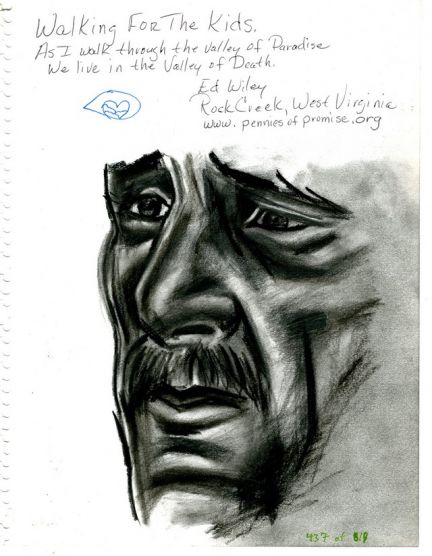
Listen to Ed Wiley speak about his time on the Coal River, the changes that he has seen, and his daily connections to the land. Photo by Antrim Caskey, interview by Sam McCreery.
Commons depend on practices of “commoning,” including not only the harvesting and use of resources, but talking about them (“Gladys found thirty molly moochers yesterday,” “I senged and senged and senged in there, but I didn’t find any”). Such talk is a way of both celebrating the commons and monitoring its status. (“We had all the butternut trees located;” “We pruned the Wolf Rivers apple trees on Bradley Mountain”), Talk can initiate ways of addressing perceived threats to that health, whether blight, drought, pollution, or enclosure (“They’ve put gates up everywhere. You can’t get in there.”). If you step into any public place on Coal River: a restaurant, a tavern, a convenience store, a post office, or barber shop, you might witness practices of commoning through talk: talk about what is in season and where, and how well it is doing this year, related to what has gone on in years past.
“The hickories didn’t hit this year.”
“There’s big chubs in there.”
“Someone uses that spot for camping – they’ve set ramps out so they can have some.”
Such talk is also one of the ways of educating children, who from a young age learn the names of species and places and associated stories of family and community history. The prevalence of talk about the seasonal round is a sign of its continuing importance on Coal River. (Notes: Weathering the Storm, Tending the Commons, American Ginseng and the Idea of the Commons, Molly Mooching on Bradley Mountain, Ethnographic EO and A)
The Seasonal Round of Land Use in the Big Coal River Valley
The Mixed Mesophytic Seasonal Round. Based on field sketches and interviews by Mary Hufford with community members on Coal River, 1994-1999. Background aerial photograph by Lyntha Scott Eiler, American Folklife Center, Library of Congress. From poster produced by the Center for Folklore and Ethnography, University of Pennsylvania.
In addition to the year-round work provided by coal mining, construction, service employment and self-employment, the culture of Coal River Valley is deeply connected to the use of the land and mountains for supplementing food and income as well as binding communities together. These activities, gardening, gathering and community events, are dependent on the cyclical changes of seasons and natural surroundings of Coal River throughout the year. Click here to see an interactive graphic depiction of the seasonal round of activities on Coal River, developed in the mid-1990s by residents of the Coal River Valley with Mary Hufford, curator of the Tending the Commons collection at the Library of Congress' American Folklife Center.
Spring:
Spring begins the planting and gathering season. As the weather warms in March and April, local gardens are sowed with a variety of crops including onions, greens, peas, potatoes, sweet potatoes, corn, beans and tomatoes. The first spring rains also usher in an important community tradition of hunting wild greens in the surrounding mountains. The wild greens gathered for domestic use in early spring include ramps, poke, nettles, woolen britches, lamb’s tongue and sassafras. Picking greens has traditionally been a social activity enjoyed by women. "That was the thrill of my life," Carrie Lou Jarrell recalled, "To get to go with all those women, because they talked about good stuff."
To listen to Carrie Lou Jarrell, of Sylvester, talk about picking greens with the women in Rockhouse Hollow, clickhere. Tending the Commons interview with Mary Hufford courtesy American Folklife Center, Library of Congress.
Ramps in particular are important to the culture of Appalachia and Coal River Valley. Ramp festivals not only celebrate the wild greens and the varieties of dishes based around it, but also bring communities together in recognition of a culture connected to the gifts of the mountains. The beginning of turkey hunting season at the end of April is also a much awaited moment, an opportunity to test not only marksmanship but skill at calling these birds famed for both wariness and keen eyesight.
To listen to Ivan Jarrell getting a wild turkey to gobble on Scarbro Hollow, Dry Creek, click here. (You can hear the distant gobble most clearly toward the very end).
In late April and early May the first thunderstorms shake loose Molly Moochers, also known as morels, delicious mushrooms that grow in isolated patches in the mountain forests (Photo by Kenny Cottrell, Horse Creek, WV.)
Listen to Laffon Pettry, Drew's Creek, talking about how to go molly mooching. Tending the Commons interview with Mary Hufford courtesy American Folklife Center.
Summer:
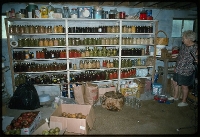
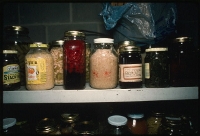
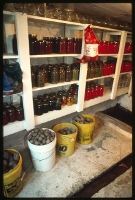
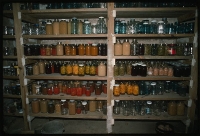
In addition to maintenance of gardens, the summer gathering of berries begins in June and continues through July. The wild berries gathered from the mountains include strawberries, red mulberries, blackberries, wild grapes, raspberries, huckleberries, elderberries, groundberries and wineberries. Many of the wild greens and berries gathered in Spring and Summer are also canned and dryed for preservation during this period.
Listen to Donna Wills, Rock Creek, "There is nothing that I can't can." Tening the Commons interview with Mary Hufford courtesy American Folklife Center.
The warm weather also brings fishing and fish fries, both important traditions establishing connection between community members and their natural surroundings. Family reunions, often on family property and campgrounds situated in mountain clearings typically occur in June and July. August brings out one of the most important plants to the culture and economy of Coal River: Ginseng. Unlike many of the other wild greens gathered for commercial use, ginseng is gathered and sold on highly regulated markets. The gathering of ginseng can provide a very substantial income supplement to Coal River Valley residents. (Photo by Sam McCreery).
Listen to ginseng buyer Randy Halstead describe the joys of going ginsenging. Tending the Commons interview with Mary Hufford courtesy American Folklife Center.
Fall:
The fall brings the last harvests of the year, with potato-digging and corn-shucking. Families work to put away the food they have harvested, including canning extra garden produce. After the harvest, gardens are cleared and prepared for the next year.
Listen to Joe Aliff, of Rock Creek, talking about harvest time in the mountains.
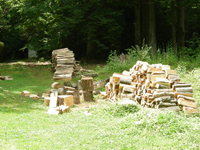
Gathering in the fall turns to nuts, including hickory, beech, butternuts, chestnuts and walnuts. In addition to the commercial gathering of Ginseng, other resources gathered for sale in the fall include Sumac, Witchhazel and Sassafras. In addition, local residents work through early fall to finish cutting and hauling enough firewood to provide heat through the winter. (Photo by Sam McCreery).
Winter:
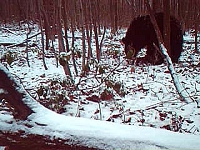
In the winter, gardens are sowed with cover crops and are left fallow until spring. An important traditional activity in the winter months is the cutting of Christmas trees from the mountains. Deer and bear hunting are also important practices that take place in the winter months. The mountains also continue to provide firewood for heating homes and fueling campfires, and leaves for insulating mash. (Photo by Kenny Cottrell, Horse Creek, WV).
Listen to former moonshiner John Bowman, of Piney View, talk about how to keep the mash warm in the winter, mixed-mesophytic style, relying on leaves shed by Appalachian deciduous hardwoods.
Pond Knob: A Case Study of Common Land Use
The communal use of the land in Coal River Valley is based on the collected heritage of the early settlers who farmed and gathered the surrounding landscape. These traditions remain important parts of the Coal River communities; not only do they provide supplements to income and locally supplied food, but they also maintain the cultural connection to the streams, hollows and mountains. Despite a history marked by resource exploitation, struggles for unionization rights and economic justice, the culture and traditions gave communities continued strength. However, the practices of mountaintop removal coal mining destroy the source of this entire culture: the mountains themselves.
Pond Knob is a mountain summit in Raleigh County that reached 3,317 feet, or 1,011 meters above sea level on the south side of the Marsh Fork of the Coal River. It is named after the natural pond that sits near the top of the mountain. Pond Knob, near Rock Creek and Dry Creek, was a popular destination for camping, four-wheeling and community meeting places because of its natural beauty.
"Used to be a big thing, everyone would go up to Pond Knob and get together the first week of April. Main reason was to hunt for indian artifacts and ramps," says Kenny Cottrell, a resident of Horse Creek. "Our friend Lewis used to camp full time up on Pond Knob under a tarp. He would hang his food up in a tree. The bear would get it every time, get all his food, just enough so he couldn't use it. Me and Lewis built the cabin in eight hours, out of all dead trees, to keep his supplies from the bear. Even ate two of his library books. It didn't have no door, so Lewis would nail himself in with poles. He said he figured the poles would slow the bear down long enough for him to hit it with a double edged ax. The bear would still dig under, so Lewis put barbed wire up, but it still didn't stop the bear."
Pond Knob also has a deep historical and cultural significance for Coal River Valley. A Native American hunting trail passed through Indian Gap on Pond Knob, and the remains of these hunting parties can be found in arrowheads and burial mounds on the mountain. Ernie Thompson attests to the presence of Native American burial mounds on Pond Knob: “up on pond knob there was a big natural pond up there, big Indian camp.” Ernie continues on to point out the destruction of Appalachian history by mountaintop removal coal mining, stating “they’re taking our history away. People buried back there… there’s a lot of Indians buried back there cause I’ve seen the mounds...That’s not right.” [6]
To listen to Jim Wills, of Rock Creek, describing how neighbors on Coal River Mountain backfired Pond Knob in 1985, click here.Tending the Commons interview with Mary Hufford courtesy American Folklife Center, Library of Congress.
Today marks 50 years since a C-45 Army plane crashed on the Pond Knob and killed four people — Maj. George A. Smith and Capt. Edward H. Holcamp, United States Army, and civilians, Mr. and Mrs. William Hamilton from Huntington.
Raleigh County Coroner S.A. Ford stated that the three men died instantly, but Mrs. Hamilton lived at least 24 hours after the crash and even managed to bandage one of her broken arms. She was trying to bandage her leg when she died from shock induced by loss of blood.
Norman Price, Pete Toney, and Buster Burnside found the wreckage on Saturday, Sept. 13, after a weeklong search.
The wrecked plane was found on the pond, an elevated peak on Coal River Mountain between Horse Creek, Dry Creek, and Sycamore Creek; and in the middle of a strip mining operation operated by Truax-Trayer Mining Company.
The crash happened on the mountain above a 100-foot highwall. There was only one way to the wreckage.
The story told at the time was that the woman had crawled some distance from the burned fuselage but could get no farther because of the highwall.
Even today, pieces of the plane can be found.
One of A.T. Massey’s gigantic mountaintop strip mines is headed that way right now and another piece of our history will be lost.
Richard A. Bradford
For more information on sources used in this theme, please see the Notes on Sources page.


.jpeg) Spring begins the planting and gathering season. As the weather warms in March and April, local gardens are sowed with a variety of crops including onions, greens, peas, potatoes, sweet potatoes, corn, beans and tomatoes. The first spring rains also usher in an important community tradition of hunting wild greens in the surrounding mountains. The wild greens gathered for domestic use in early spring include ramps, poke, nettles, woolen britches, lamb’s tongue and sassafras. Picking greens has traditionally been a social activity enjoyed by women. "That was the thrill of my life," Carrie Lou Jarrell recalled, "To get to go with all those women, because they talked about good stuff."
Spring begins the planting and gathering season. As the weather warms in March and April, local gardens are sowed with a variety of crops including onions, greens, peas, potatoes, sweet potatoes, corn, beans and tomatoes. The first spring rains also usher in an important community tradition of hunting wild greens in the surrounding mountains. The wild greens gathered for domestic use in early spring include ramps, poke, nettles, woolen britches, lamb’s tongue and sassafras. Picking greens has traditionally been a social activity enjoyed by women. "That was the thrill of my life," Carrie Lou Jarrell recalled, "To get to go with all those women, because they talked about good stuff."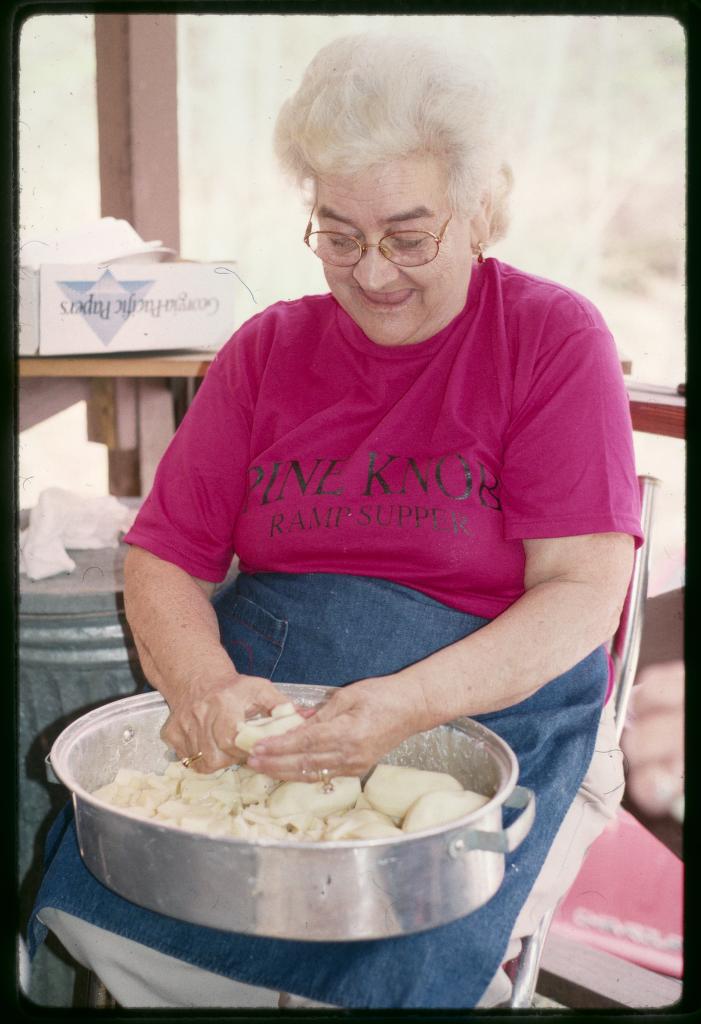



 In the winter, gardens are sowed with cover crops and are left fallow until spring. An important traditional activity in the winter months is the cutting of Christmas trees from the mountains. Deer and bear hunting are also important practices that take place in the winter months. The mountains also continue to provide firewood for heating homes and fueling campfires, and leaves for insulating mash. (Photo by Kenny Cottrell, Horse Creek, WV).