A "Just" Transition
“Economic development is of the utmost importance, but concern for the well being of citizens is a priority. This wind farm could save local communities, people's lives, and our way of life, while also bringing new economic development to the area.
This idea is an excellent alternative, and maybe the only alternative for our lands which are being permanently destroyed. This is a major change in our history. We are setting a pattern for the rest of the world to follow in that there are other alternatives to depleting fossil fuels, and that can guarantee that generations to come will have a sustainable future here in the heart of coal country...
What better place than Coal River Mountain for this to happen.”
– Chuck Nelson, Glen Daniel, WV
– Chuck Nelson, Glen Daniel, WV
The Expansion of Mountaintop Removal
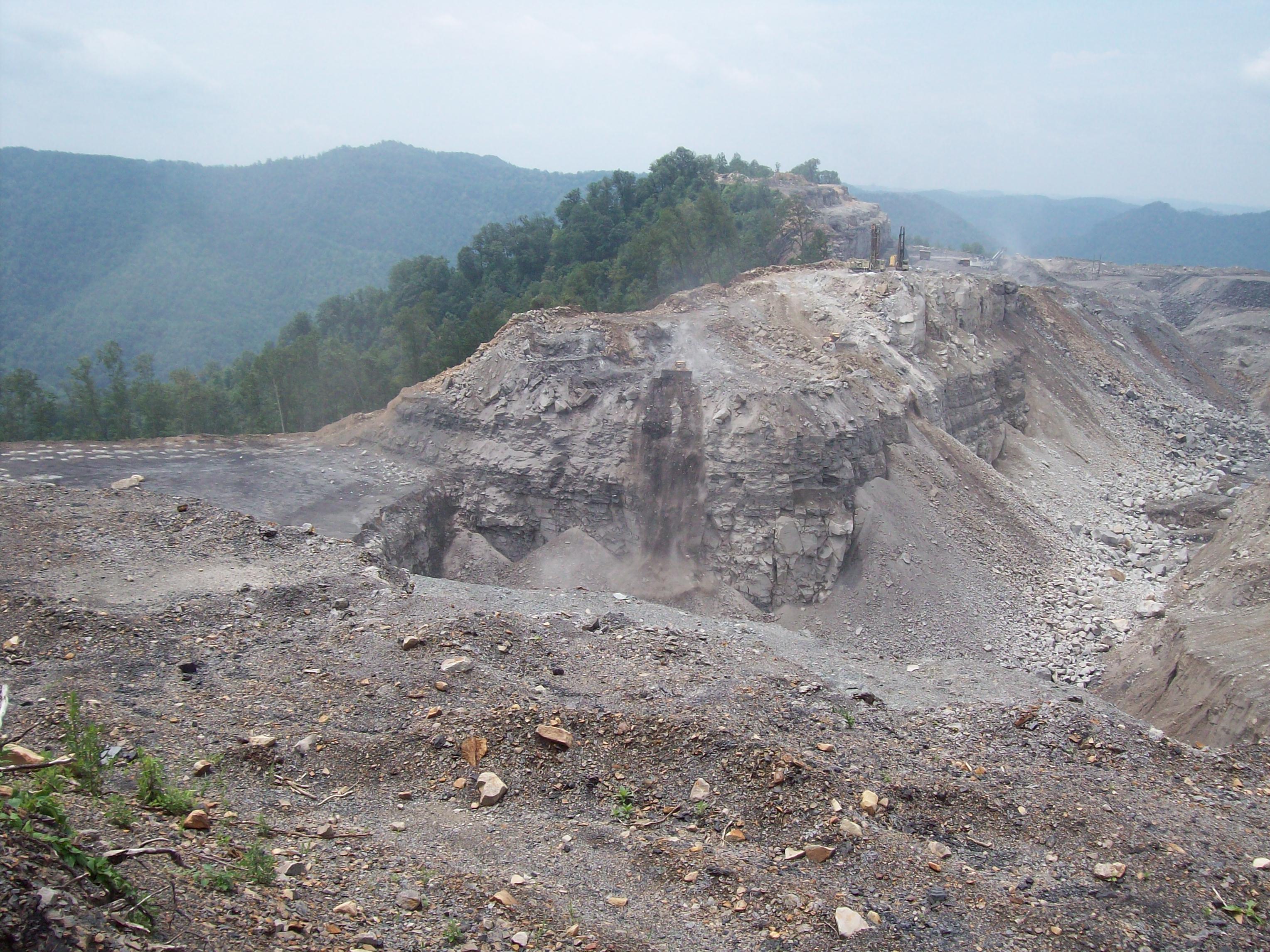
For over a century, the rest of the United States has grown and prospered, largely on the backs of loggers and coal miners in Appalachia. The Mountaineers of West Virginia, eastern Kentucky, Pennsylvania and elsewhere have given their labor and their lives to provide the resources and energy for our nation to grow to the size, comfort and power status we currently experience and "enjoy" today. For the last three decades, our condition has been maintained thanks to the expansion of perhaps the worst social and environmental injustice to occur in the modern United States -- Mountaintop removal coal mining.
[Photo Courtesy of Rory McIlmoil]
Mountaintop removal coal mining has been in practice since the late 1960s, but it wasn't until after the passage of the Clean Air Act of 1990 that it truly expanded to its current size and scope. The neglect of the pressures to expand MTR mining that would result from the Clean Air Act when it was passed allowed coal companies to more or less get permitted for MTR mines at almost at will. Over the course of merely a decade, the amount of coal produced in WV from MTR grew nearly ten-fold, and surface mining as a proportion of coal production in the southern counties reached over 50%.
[You can download a report detailing the expansion of MTR and its impacts here, under the heading "Environmental Justice and Pollution"]
One of the main issues in relation to the permitting of MTR mines was that the state Department of Environmental Protection - which is also in charge of permitting the mines (seems contradictory) - was not required to take the cumulative environmental and community impacts into account when deciding to approve a permit or not. If they had been required to do so, hundreds of MTR permits would have been denied. Since they didn't, MTR began having a greater and greater impact on local residents and on the surrounding environment.
Now, MTR has reached a critical stage where a wide swath running northeast to southwest from southwestern Virginia, through southern West Virginia and into eastern Kentucky, has been almost completely destroyed, and so the struggle to preserve the remaining mountains and natural resources is as important as ever. What is critical is that any future opportunities for economic development will not require any more "flat land" than has already been created due to strip-mining. There is enough flat land already, over 1.2 million acres of it. Future development opportunities will rely on the sustainable use of the remaining resources, and on the restoration of the lands and waters that have been impacted by mountaintop removal.

In other words, any viable opportunities for economic development and diversification in the coalfields of Central Appalachia will by default require a permanent cessation and ban of all mountaintop removal coal mining.
After over a century of oppression, exploitation and economic impoverishment at the hands of the coal industry, it is time for local, state and national leaders to shift their attention toward transitioning the Appalachian coalfields away from MTR and make Appalachia a leader in the development of a new, green energy economy. Coal is no longer necessary in order to "Keep the Lights On."

Coalfield residents deserve to be on the forefront of revitalizing our economy, and they deserve to be the beneficiaries of our economic progress, rather than the ones left behind. It is time to stop pandering to coal interests and neglecting the impacts of our electricity consumption on the citizens and mountains of Appalachia. It is time to help Appalachia transition to a Just and Sustainable future, structured with a sensitivity to, and directed by, the desires of those living in the hollers and valleys.
“Our whole life – over 60 years – has been spent on this mountain. We have seen the mountains around us destroyed, and we do not want to see any more MTR mining.”
– Delbert and Julia Gunnoe, Rock Creek, WV
Preserving Coal River Mountain for the development of a wind farm would be a
good and symbolic place to start
good and symbolic place to start
But time is short for this transition. So much has been destroyed already, and despite the coal industry claims that there are 250 years' worth of coal left in Appalachia, research has shown otherwise.
The truth is, the coal is quickly running out. As this happens, jobs in the coal industry will continue to decline, and more of Appalachia's communities and environment will be degraded. So its time to Just Transition Now!!
Coal is Running Out
Five counties in southern WV account for 50% of all coal produced in the state, and over 70% of all coal produced in southern WV. These are Boone, Logan, Mingo, Raleigh and Kanawha. Aside from Raleigh County, each of these five counties has plenty of “flat land” available, due to surface mining, that could be used for economic devleopment.
Further, each of these counties has experienced a sharp decline in mine productivity (tons produced per miner-hour) since the late 90's. This has occurred even as coal production in each of the counties has shifted toward more surface mining, which should have resulted in increased productivity, further suggesting that southern WV coal is becoming less and less economical to mine, and may soon be too costly to produce. As this happens, there will be even more pressure to allow mountaintop removal, since it is the "cheapest" and easiest way to mine coal. What this means though, is that more and more land has to be destroyed every year in order to produce the same amount of coal as the year before.
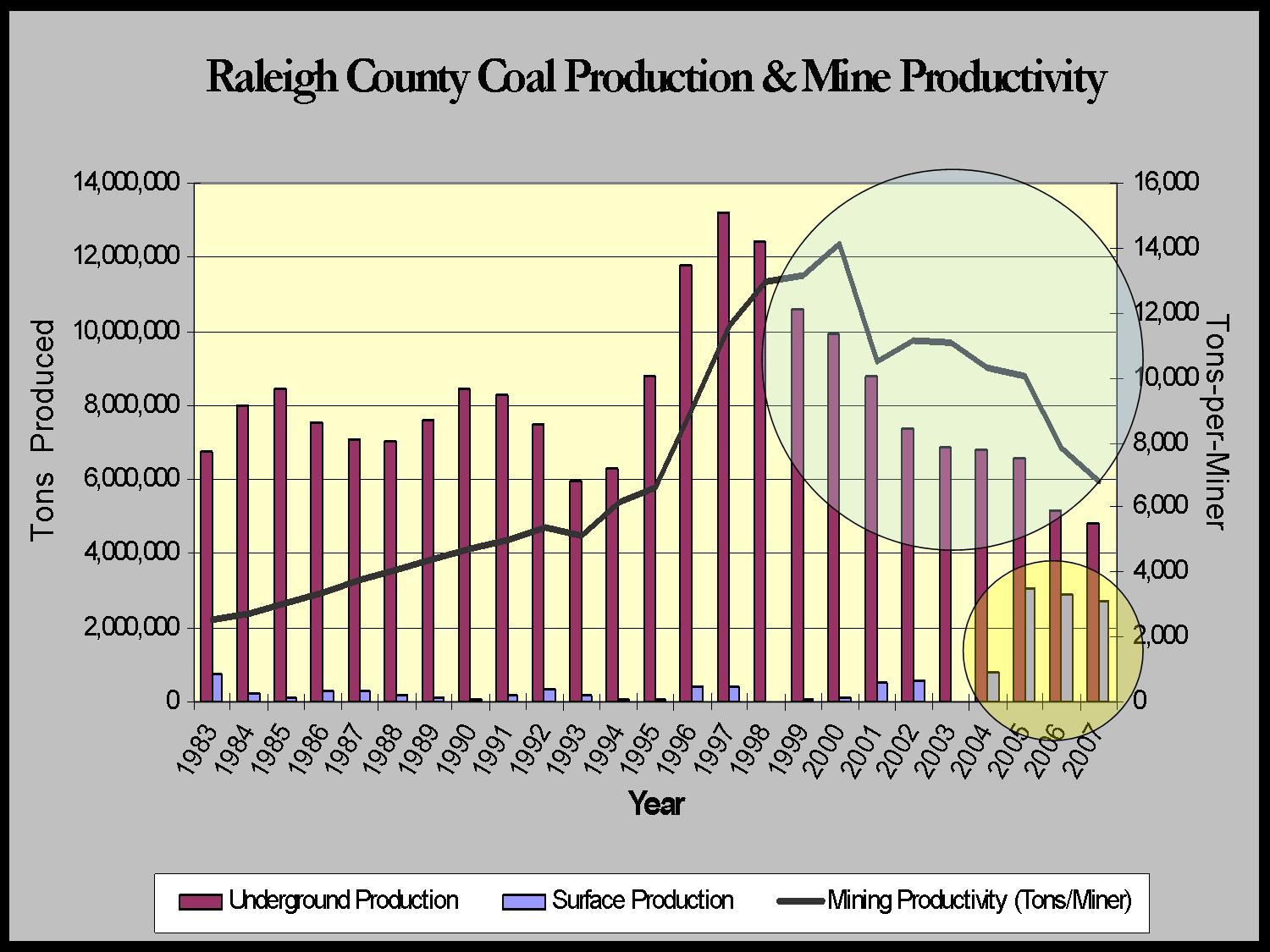
Data for Raleigh County, West Virginia - where Coal River Mounain is situated - illustrate the declining trend in mine productivity. The following information shows that there are less than 20 years left of economically recoverable coal in Raleigh County. Indeed, Coal River Mountain may be one of the last places in the county that will produce any significant amount of coal, so if it is destroyed - and along with it, the existing wind resource - then there will be nothing left in the west end of Raleigh County for developing economic alternatives.
.jpg)
[Data provided by the Energy Information Administration. Chart created by Rory McIlmoil]
This first chart shows coal production trends in Raleigh County since 1983, and splits production according to mining type. As shown within the yellow circle, coal production in the county hit a peak in 1997 and hasn’t achieved that level of production since. Up until 2003, county coal production depended mostly on underground mining, and indeed, total production aligned with underground production almost precisely. Since 2003, however, underground production has continued to decline, while surface mining has expanded. Since 2005, surface mining has also experienced a small decline, and overall, surface mining has not been able to make up for the rapid loss in underground coal production.
The main point to take from this graph is that according to production trends, coal production in Raleigh County is facing a continuous decline, and the data do not suggest that a significant rebound is possible.This is illustrated by the heavier dependence on surface mining as coal reserves become harder to extract – indicating that the coal seams are getting thinner. This conclusion is supported by the third chart, which illustrates trends in mine productivity.
.jpg)
[Data provided by the Energy Information Administration. Chart created by Rory McIlmoil]
As this chart shows, coal mining employment in Raleigh County has experienced a loss of 1,640 jobs since 1983. The last true resurgence in mining employment was in 1996/1997, when employment reached nearly 1,400 miners. There is currently a possible resurgence in employment, but given production trends, this resurgence will not last long.
Since 2003, employment has been rising, at first due to a sharp increase in surface mining, but more recently due to a sharp increase in underground mining – even as underground mine production has continued to fall. Combined with the evidence provided by the production and productivity graphs, the Raleigh County workforce cannot rely on coal mining to sustain a significant level of employment for far into the future, for as economically recoverable coal reserves run out and the underground mining production levels continue to fall, there will be fewer and fewer jobs available related to coal mining in Raleigh County.
There are only so many locations within the county that can be surface mined, and once these have been mined, the coal will be gone, along with the employment opportunities and the coal-related tax revenues for the county. There are also only so many locations/mountains within the county that exhibit viable wind resources, and Coal River Mountain stands as the most prominent. Unlike coal mining, a wind farm on Coal River Mountain would provide stability in both employment and tax revenues.
[Data provided by the Energy Information Administration. Chart created by Rory McIlmoil]
National and global research on coal reserves indicate that mine productivity stands as a significant marker of the status of economically recoverable coal reserves. Declines in mine productivity – the tons of coal produced per miner – indicate that the coal seams being extracted are harder to extract, meaning that they are increasingly thinner and deeper. Using this information as an illustrative tool for Raleigh County, the chart above – in combination with the first chart showing absolute production trends - thus indicates that Raleigh County may be rapidly running out of coal.
Between 1997 and 2003, when total production was mostly aligned with underground mining production, coal production in Raleigh County declined, while at the same time, mine “productivity” declined just as rapidly, meaning that the pace at which production dropped was driven by either a subsequent decline in productivity or by a subsequent decline in the economic recoverability of the underground coal reserves.
What is most important to note however is that even the rapid increase in surface mining between 2004 and 2007 failed to halt the trend of declining productivity, which suggests that even the surface mines in Raleigh County are facing an uncertain future in terms of sustaining coal production. In other words, Raleigh County is running out of coal, and surface mining can act only as a short-term stop-gap, not as a solution.
It is time for Raleigh County to realize that the coal will soon run out, perhaps even within 15-20 years, and as that time approaches, the expansion of surface mining will only serve to further destroy the natural resources that the county and its citizens could benefit from far into the future.
For an economic comparison between Wind and MTR, and an argument as to why Coal River Mountain should be preserved for wind power and why Raleigh County should begin supporting the creation of a wind industry, see the Economic Comparison page within this theme.
"Boom and Bust"? Or Everything "Just"?
Another reason for transitioning the Appalachian coalfields to a more diverse and sustainable economy is because coal doesn't provide the economic stability the communities and residents need to get out of poverty. The coal economy is marked by cycles of severe "booms" and "busts," based on the cyclical demand for coal and the volatility of coal prices. These cycles are even worse when the national economy struggles like it is right now (May 2009). Since the beginning of 2009, West Virginia alone has lost over 2,000 coal miners to unemployment due to the shutting down of mines - both underground mines and strip-mines. That amounts to over 10% of coal mining jobs being lost in a span of four months.
Combine the impoverishing nature of a dependence on coal with the increasing costs to human health and the environment from mountaintop removal coal mining, and you get a region that is rapidly losing any hope for a future beyond coal. That future is still possible, and renewable energy development such as wind power offers one strong and real opportunity for realizing a new and better economy in Appalachia, and for preserving the culture and traditions of local residents.
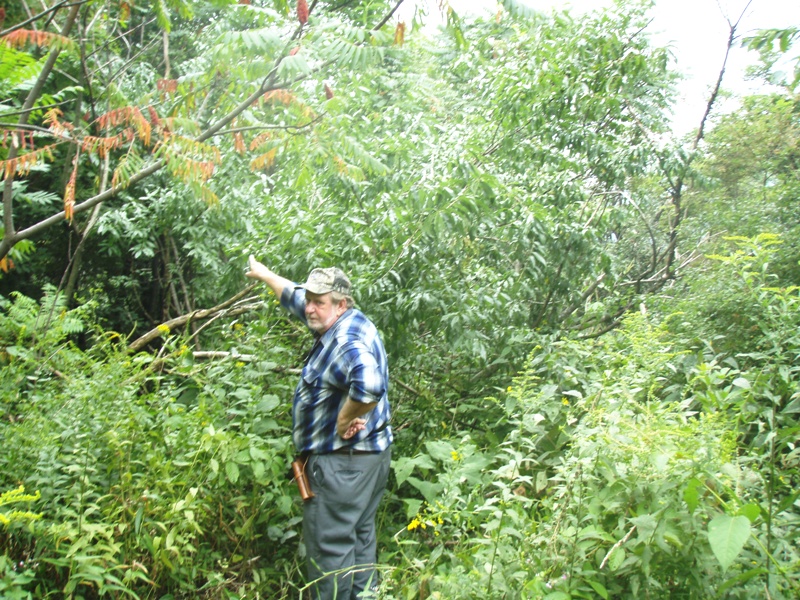
[Resident of Colcord, WV pointing at an apple orchard on top of Coal River Mountain that has been around for over 70 years, and that local residents hike to every summer to collect fresh apples for eating, making pie or making apple butter. This orchard would be destroyed by the proposed mountaintop removal mining operations. Photo Courtesy of Rory McIlmoil]
A wind farm on Coal River Mountain - just as any wind farm - would help preserve the Appalachian culture, and would leave open the opportunity for other industries and other economic models to be developed. Opportunities such as the creation of a regional market for handcrafted goods and locally grown produce, for instance. Or opportunities for a sustainable timber industry, or a non-timber forest products market. The expansion of the tourism industry is also still possible, and can be realized with the restoration of the lands and rivers that have been impacted by coal extraction. Land restoration is another industry that should be created, and funded by a greater taxation on coal, which would help bring some of the wealth back to the region.
There are vast opportunities for restoring the coalfields and for developing alternative economic models based on the use of local knowledge and the sustainable use of the land - two things that go hand in hand in the mountains. The time to begin creating that Appalachia is now though, and the first step is to bring an end to mountaintop removal coal mining.
Sylvia_Bradford1-max.mp3Sylvia Bradford clip 1hazy-04-hazy-and-shumates-today
Sylvia_Bradford2-max.mp3Sylvia and Rick Bradford on how MTR has affected their liveshazy-04-hazy-and-shumates-today
Sylvia_Bradford3-max.mp3The Bradfords and trainshazy-04-hazy-and-shumates-today
debbie_jarrell-1-max.mp3Debbie Jarrell on disappearing housing stockhazy-04-hazy-and-shumates-today
Charles-EdClip3.mp3Ed Wiley on the Appalachian Mtns. and waterhazy-04-hazy-and-shumates-today
Sylvia_Bradford5-max.mp3The Bradfords on lack of accesshazy-04-hazy-and-shumates-today
debbie_jarrell-1-max.mp3Debbie Jarrell on Marsh Fork Elementarycoal_river_101-06-changes-in-lifestyle
debbie_jarrell-2-max.mp3Debbie Jarrell on lack of access to the mountainscoal_river_101-06-changes-in-lifestyle
MTR2CharlieBEdit1.mp3Charles Ballard on changes since MTRcoal_river_101-06-changes-in-lifestyle
BettyRoss.mp3Betty Ross on Floodingcoal_river_101-06-changes-in-lifestyle
Meadows1.mp3Jimmy Meadows on outmigrationcoal_river_101-05-outmigration
judy_crm_clip1.mp3Judy Bonds on Coal River Mountaincrm-01-current-land-use-on-coal-river-mountain
Charles-EdClip2.mp3Ed Wiley on Health Effects at MFEhazy-02-marsh-fork-elementary
Thompsonclip1.mp3Ernie Thompson on Slurry Impoundmentsmtr-02-environmental-impacts
Thompsonclip2.mp3Ernie Thompson "Money got in the way"mtr-03-legislation-permits-regulations
Maria1.mp3Maria Lambert on Water Qualityprenter-04-health
Rory-GB4.mp3Gary Anderson on Coal River Windwind-01-introduction-to-coal-river-wind
Rory-GB3.mp3Barbara Anderson discusses Mountain Access and Traditional Usewind-01-introduction-to-coal-river-wind
Rory-Chuck1.mp3Chuch Nelson on Threat of Valley Fills on Coal River Mountainwind-02-the-threat-of-mtr-on-coal-river-mountain
Rory-GB2.mp3Gary Anderson describes 2001 Clear Fork Floodswind-02-the-threat-of-mtr-on-coal-river-mountain
Rory-Chuck4.mp3Chuch Nelson "We gotta shut 'em down"wind-02-the-threat-of-mtr-on-coal-river-mountain
Rory-Judy2.mp3Judy Bonds "The Last Vestige of Jobs and Sustainability"wind-03-the-coal-river-mountain-wind-campaign
Rory-GB5.mp3Gary Anderson Imagines a New Wind Industrywind-04-wind-vs-mtr-for-coal-river-mountain-the
Rory-Chuck3.mp3Chuck Nelson "This is Our Last Chance"wind-06-a-just-transition
MTR2VernonHEdit1B.mp3Vernon Haltom on Protecting Places and Resourcescrm-01-current-land-use-on-coal-river-mountain
EdWileyInEdit1.mp3Ed Wiley "A Magical Place"crm-02-community-land-use-in-coal-river-valley
Meadows1.mp3Jimmy Meadows on Loss of Underground Mining Jobscrm-03-undergound-mining
Charles-EdClip1.mp3Ed Wiley on Sludge Impoundmentshazy-02-marsh-fork-elementary
238002.mp3Laffon Pettry, "Molly mooching"crm-02-community-land-use-in-coal-river-valley
080009.mp3Donna Wills, "nothing I can't can"crm-02-community-land-use-in-coal-river-valley
074025.mp3Randy Halstead, Joys of ginsengincrm-02-community-land-use-in-coal-river-valley
077007.mp3Joe Aliff, harvest timecrm-02-community-land-use-in-coal-river-valley
088006.mp3John Bowman, keeping the mash warmcrm-02-community-land-use-in-coal-river-valley
050002.mp3Benny Turner, Native Americans on Bolt Mtn.coal_river_101-01-history-of-coal-river-part-1
077010.mp3Joe Aliff and his Cherokee grandfathercoal_river_101-01-history-of-coal-river-part-1
119011.mp3Howard Miller, corn-woodland-pastureland systemcoal_river_101-01-history-of-coal-river-part-1
215001.mp3Howard Miller, people hiding on mtn. from marauding soldierscoal_river_101-01-history-of-coal-river-part-1
Joe_Aliff_we_had_a_full_fledged_war_077022.mp3Joe Aliff, arming miners for Battle of Blair Mtn.coal_river_101-02-history-of-coal-river-part-2
046012.mp3Mae Bongalis, a visit with Mother Jonescoal_river_101-02-history-of-coal-river-part-2
141006.mp3Cody Dickens, a visit from the land companycoal_river_101-04-absentee-land-ownership
162008.mp3Dr. Jim Michael Wills of Rock Creek on absentee landownershipcoal_river_101-04-absentee-land-ownership
038002.mp3Shorty Bongalis on West Virginians migrating to Ohiocoal_river_101-05-outmigration
088003.mp3John Flynn about moonshinincoal_river_101-05-outmigration
088004.mp3John Bowman, staying in Coal River by moonshinincoal_river_101-05-outmigration
077024.mp3Joe Aliff, how Coal River Mtn. is a drug storecrm-01-current-land-use-on-coal-river-mountain
Thompsonclip1.mp3Ernie Thompson, former mine inspector on slurry impoundmentscrm-05-the-brushy-fork-slurry-impoundment
Jen-JackSpaderoClips.mp3Jack Spadero, engineer on impacts of MTR and slurrycrm-05-the-brushy-fork-slurry-impoundment
Rory-GB4.mp3Gary Anderson, Coal River Mountain Wind campaignwind-06-a-just-transition
Rory-Judy1.mp3Judy Bonds, coal is NOT West Virginiawind-06-a-just-transition
hazy-01-near-the-mouth-of-hazy1hazy3
coal_river_101-01-history-of-coal-river-part-11coal-river-1011
crm-01-current-land-use-on-coal-river-mountain1crm2
prenter-01-prenter-and-surrounding-communities1prenter4
mtr-01-introduction1mtr6
wind-01-introduction-to-coal-river-wind1wind7
cresources-01-community-resource-mapping1cresources5
hazy-02-marsh-fork-elementary2hazy3
coal_river_101-02-history-of-coal-river-part-22coal-river-1011
crm-02-community-land-use-in-coal-river-valley2crm2
prenter-02-water-quality2prenter4
mtr-02-environmental-impacts2mtr6
wind-02-the-threat-of-mtr-on-coal-river-mountain2wind7
cresources-02-children-are-the-future-of-the-coal-rive2cresources5
hazy-03-absentee-land-ownership3hazy3
coal_river_101-03-glimpse-into-a-coal-river-family-mid-20t3coal-river-1011
crm-03-undergound-mining3crm2
prenter-03-coal-slurry3prenter4
mtr-03-legislation-permits-regulations3mtr6
wind-03-the-coal-river-mountain-wind-campaign3wind7
cresources-03-bill-lucas3cresources5
hazy-04-hazy-and-shumates-today4hazy3
coal_river_101-04-absentee-land-ownership4coal-river-1011
crm-04-forest-resources-and-timbering4crm2
prenter-04-health4prenter4
wind-04-wind-vs-mtr-for-coal-river-mountain-the4wind7
cresources-04-chronicling-the-coal-river-valley-s-coal4cresources5
hazy-05-update-lawsuits-possible-new-location-fo5hazy3
coal_river_101-05-outmigration5coal-river-1011
crm-05-the-brushy-fork-slurry-impoundment5crm2
prenter-05-community-responses5prenter4
wind-05-wind-vs-mtr-for-coal-river-mountain-ener5wind7
cresources-05-clear-fork-couple5cresources5
coal_river_101-06-changes-in-lifestyle6coal-river-1011
crm-06-community-letter-to-w-va-gov-joe-manchin6crm2
prenter-06-stories-from-prenter6prenter4
wind-06-a-just-transition6wind7
cresources-06-connie-and-terry-dillon6cresources5
prenter-07-news7prenter4
wind-07-update-blasting-has-begun-on-coal-river7wind7
cresources-07-danny-cook-and-mack-james-creek7cresources5
wind-08-organizing-for-wind-power8wind7
cresources-08-debbie-jarrell8cresources5
cresources-09-delbert-and-judy-gunnoe9cresources5
cresources-10-elmer-mays-horse-creek10cresources5
cresources-11-frankie-mooney11cresources5
cresources-12-gary-and-barb-anderson12cresources5
cresources-13-jimmy-platt13cresources5
cresources-14-junior-walk14cresources5
cresources-15-justin-wills15cresources5
cresources-16-kathleen-dickens16cresources5
cresources-17-kay-and-danny-howell17cresources5
cresources-18-kendra-dickens18cresources5
cresources-19-lonnie-burnside19cresources5
cresources-20-project-build-it-up-wv-summer-youth-prog20cresources5
cresources-21-project-community-greenhouse21cresources5
cresources-22-project-first-solar-thermal-installation22cresources5
cresources-23-project-greenhouse-gardens23cresources5
cresources-24-project-mural-project-in-whitesville24cresources5
cresources-25-project-the-tadpole-project25cresources5
cresources-26-rachel-bey26cresources5
cresources-27-ray-and-lottie-cottrell27cresources5
cresources-28-sandy-simmons28cresources5
cresources-29-shannon-dickens29cresources5
cresources-30-sharon-thompson30cresources5
cresources-31-sheila-and-natasha-walk31cresources5
cresources-32-sherry-geisler32cresources5
cresources-33-wilma-cook33cresources5
Charles Ballardcoal_river_101-06-changes-in-lifestyle

Judy Bondscrm-01-current-land-use-on-coal-river-mountain
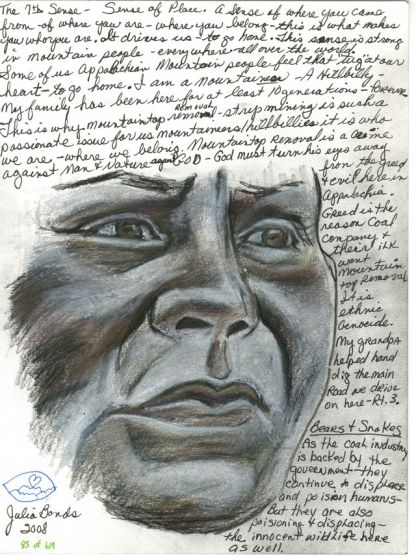
Judy Bonds, 1 of 3coal_river_101-01-history-of-coal-river-part-1
Judy Bonds, 2 of 3coal_river_101-01-history-of-coal-river-part-1
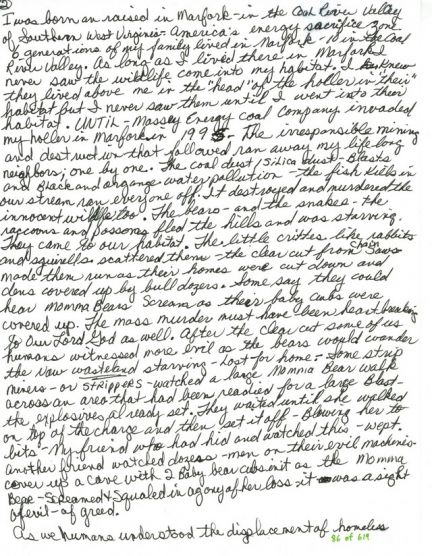
Judy Bonds, 3 of 3coal_river_101-01-history-of-coal-river-part-1

Sarah Haltomcrm-01-current-land-use-on-coal-river-mountain

Vernon Haltomcrm-01-current-land-use-on-coal-river-mountain

Vernon Haltomhazy-02-marsh-fork-elementary
Debbie Jarrellcoal_river_101-06-changes-in-lifestyle

Debbie Jarrellhazy-04-hazy-and-shumates-today
Debbie Jarrellwind-01-introduction-to-coal-river-wind
Debbie Jarrellhazy-02-marsh-fork-elementary
Debbie Jarrellcoal_river_101-05-outmigration
Jen Oshacrm-03-undergound-mining

Jen Oshacoal_river_101-06-changes-in-lifestyle
Jen Oshahazy-04-hazy-and-shumates-today
Jen Oshacrm-05-the-brushy-fork-slurry-impoundment
Jen Oshaprenter-07-news
Jen Oshacrm-04-forest-resources-and-timbering
Jen Oshahazy-01-near-the-mouth-of-hazy
Jen Oshahazy-02-marsh-fork-elementary
Ed Wileyhazy-02-marsh-fork-elementary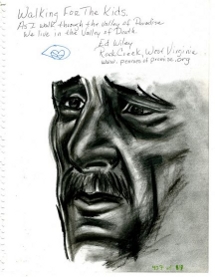
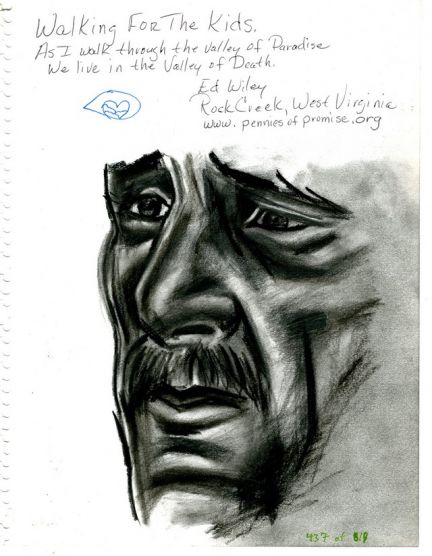
Ed Wileyhazy-04-hazy-and-shumates-today
Ed Wileycrm-02-community-land-use-in-coal-river-valley
Ed Wileycoal_river_101-06-changes-in-lifestyle